Unnumbered. The Fool: May our ignorance not profane your mysteries, O Aigobolos, Slayer of Goats.
Christian base. I start with the Fool not because he is first--most early accounts have him unnumbered--but because he is basic.

One early likeness of the Fool in playing cards is in the five-suited "Liechtenstein'sche" deck of the mid 1400's. (The 5th suit is Shields.) Here the Fool imagery shows up in the court cards, of which there are three per suit: King, Ober, and Unter, as in the Mamluck decks. The "Unten" of Cups is a naked male shown urinating into a cup. The female Fool is the "Unten" of Polo-Sticks, walking naked with a stick between her legs, as though it were a hobby-horse. The "Ober" of Polo-sticks carries his stick on his shoulder, with a bag tied around it. This image is the one most like the later Fool of tarot. (1)

From the same period the Austrian Hofämterspiel, a pack of 48 hand-painted cards in 4 suits, has the Fool as number 1, the lowest card of each suit. Above are pictures of the 1 of Bohemia, a male fool, the Narr, and the 1 of France, a female fool, the Narryn. The suits are named after countries and have the appropriate flags. The other countries are Germany and Hungary. (2)
In the "tarot of Montegna," c. 1470, a similar image, titled "Misero," has the number 1, in the suit comprised of the positions in society (below middle). (3)

In tarot, however, the Magician took the number 1 at an early date. In most decks and listings, the Fool is simply "without number." One possibility is that he had the number zero, and that the reason he is without number is that the Roman numerals later used to indicate the numbers do not have a zero. The first tarot deck to put numbers on its trumps, the Sola-Busca, c. 1491, did use Arabic numerals and gave him 0, thus keeping his position as the first of the trumps. (4)

In the game of tarot, in the first published rules, 1637, he was playable at any time, to avoid losing a more valuable card, but could take no trick. De Gebelin in 1781 says the same: "The Fool takes nothing, nothing takes it" As such, the Fool might have been considered the "zero" of all the suits, including trumps. De Gebelin says, "It is of all suits equally."(5)
Some tarot interpreters today put him at the end of the sequence, either before or after the World. But originally tarot was a card game like bridge, the number in the sequence determining the card's ability to trump other cards and win tricks. At least then, it could not have been the highest or second highest card if it could take no tricks.
For myself, when I was matching up epithets of Dionysus with the tarot trumps, the only way I could get a meaningful match up for all 22 was by putting the Fool in the "alpha" position. If for no other reason, that is where I put him.
Whatever his status, in Italy he was Il Matto (the madman), in France Le Fou (The Fool) or Le Mat (with no other meaning in French except "mate" in chess, Dummet says). In Sicily even today he is Il Fugitivo. In mid-fifteen century Italy, he was portrayed as a miserable, wandering beggar, dressed in rags. In the Sforzas' Milan, he had 7 feathers in his hair, like the Beggar King of Carnival that Giotto had painted in 1305 to represent Folly (above left and right). The "Misero" card of the so-called "Tarot of Mantegna" (not a tarot, but another game involving "triumph" cards) correspondingly shows a dog biting at a beggar as he stands too dejected to notice (above middle). (6)

In Ferrara, for the d'Este ruling family, he was portrayed as an object of interest for young boys, as his penis dangles exposed and he doesn’t mind if they touch it, or at least pull down his underwear. The preachers must have castigated this image; we see his private parts covered in the otherwise similar so-called “Gringonneur” or "Charles VI" image. We do not know which of these cards came first, but I somehow imagine the d'Este image as originating earlier. The boys are engaged in the more socially acceptable activity of throwing stones. (7)
He is the lowest of the low, and not just intellectually but also morally. Medieval proofs for the existence of God (e.g. Amselm's) sometimes began by citing scripture: "The fool hath said in his heart, 'There is no God.'" It is this fool who will end up in Hell. Yet there is also "the foolishness in God," as Paul said in I Corinthians. And the 7 feathers are the 7 weeks of Lent. Hence in the first descriptions of early tarot he was often listed last in the order of the trumps, reflecting the goal and highest status-and also the descent to hell after failing the Judgment. (8)
This antithesis between positive and negative perspectives on a card is one that we will see all through the tarot trumps. It is very much in the dialectical spirit of Ficino, Pico, and Renaissance Neoplatonism, in which one ascends to unspeakable mysteries through the embracing of opposites.

Caught between ignorance and knowledge, the Fool is also the questing soul. Monks and pilgrims often begged their way from place to place. In art, an example is from Hieronymus Bosch, of about 1490, his "Wayfarer"; a weary man with a stick fends off a dog and passes both happy and sad scenes of life around him. He is indifferent to it all, hoping to cross a rickety bridge over a stream. Similarly, in the 1672 Chosson version of the Marseille style, a stream flows between the Fool’s legs. He is crossing between worlds. (9)
References, Fool, Christian:
1. Lichtenstein'sche Spiel: http://www.geocities.com/tarocchi7/Lichtenstein1.html, with commentary by Huck.
2. The Hofämterspiel images: http://it.geocities.com/a_pollett/cards23.htm.
3. "Tarot of Montegna," "Tarot of Mantegna": Innes, The Tarot, p. 65, and http://it.geocities.com/a_pollett/cards27.htm.
4. Sola-Busca: http://www.tarotpedia.com/wiki/Sola-Busca_gallery.
5. 1637 Rules: Flornoy, Pelinerage des Bateleurs, Annex. Also http://www.tarock.info/depaulis.htm, p. 7 (in French only): it "ne prent point & ne peut estre pris," takes nothing and cannot be taken"--i.e. after another player takes the trick, the Fool returns to the pile of the one who played it. James Wickson's English-language paraphrase, clarifying the text by means of the modern rules, is at http://jducoeur.org/game-hist/wicksontarot.html. De Gebelin: Article 3, section 3, in J. Karlin, Rhapsodies of the Bizarre, p.36. In French only: http://www.tarotpedia.com/wiki/Du_Jeu_Des_Tarots.
6. Visconti-Sforza: Dummett, The Visconti-Sforza Tarot Cards, p. 101. On the web, at http://www.tarot.com/tarot/decks/index.php?deckID=35. Giotto: http://christusrex.org/www1/giotto/virtues.html.
7. d'Este Fool: http://beinecke.library.yale.edu/digitallibrary/, search "d'Este tarot." "Gringonneur": Innes, The Tarot, p. 65, also http://www.poker168.com/bwg/bwg_tl4.htm.
8. Lent: Gertrude Moakley, The tarot cards painted by Bonifacio Bembo for the Visconti-Sforza family.
8. Chausson: http://tarotchoco.quebecblogue.com/tdm-edition-de-francois-chosson-photoshoped-arcanes-majeurs/. Bosch: Lorinda Dixon, Bosch, p. 99.
B. The Mystery Tradition: putting ancient Egypt into the cards. During the early years of the tarot, most of what was known about ancient Egypt was by means of Greeks and Romans writing about it. Yet that in itself was quite a bit. In the Cary Sheet, the Fool has on his back a three-tiered hat (as does the Bateleur, shown to his left). That might have suggested Hermes Trismegistus, the legendary Egyptian wise man and magician who was thought to have inspired Moses. It also might have meant something else, e.g. the papal tiara,

On the Marseille Fool card, there are two protrusions on his head, in which his hair is bunched into, ending in a bell of some sort. This suggests horns. In Egypt the corresponding image would be the sacred Apis bull, which Plutarch describes. It was from "Apis" that the word "Serapis" derives, he said, "Osiris" plus "Apis." It is the very soul of Osiris in an animal's body. An early example of Apis in Renaissance art is a fresco in the rooms done for Pope Alexander VI (the "Apartamento Borgia") in 1494-1496. He is the embodiment of holy Osiris. (1)

The other possible connection to Egypt is not an image so much an image as a concept: the Fool's unnumbered status. Where did that convention come from? Well, it could just be from his status as a wild card, as something that did not have to follow the rule about playing suit. In modern cards, the joker doesn't belong to a suit either. But in that case he would also not belong to the suit of trumps. Well, perhaps the trumps don't count as a suit, in the way that the other four do. Or perhaps they did originally belong to suits. In the Beinecke library, the eleven surviving trump cards (which don't include the Fool) are all assigned suits. They came that way, the Beinecke librarian emailed me when I asked. In the preceding known deck, the Michelino, the 16 gods all fit the same categories as the suits, i.e. heroes, riches, virginities, and pleasures. So probably they all got assigned to suits. So if the Fool came alone, at the time of the Cary-Yale or earlier, perhaps he wasn't assigned a suit, and so he remained unnumbered.
Well, that is the theory I like the best. But here is another. He might be unnumbered because he is like the counter on a backgammon-like board game, where the other trump cards are the squares, each with its own number resident deity. Then when cards were introduced into Europe, these 21 squares plus the counter became the 21 trumps and the Fool. That would give a way for the trumps to retain a symbolic function in a sequence for the 1200 years between the end of paganism and the time of the tarot cards. There is absolutely no evidence of such a game, to be sure. I merely introduce the possibility to show that the theory of de Gebelin and Etteilla, of the cards' s Egyptian origin, isn't impossible. The sequence didn't need cards to survive from ancient Egypt.
Egypt actually had such board games, examples of which were found in the 20th century unearthing of royal tombs. Besides providing entertainment, these games had the role of teaching people the perils of life and the life to come. They were popular throughout the ancient world, and it is not unthinkable that some might have been discovered in Roman or Etruscan-era tombs in Italy.

In ancient Egypt the main game of this type was Senet. The word meant "passage" or "passing," referring both to the soul's challenges and a feature of the game. The pawns, as the one journeying rather than a stage on the way, correspond to the Fool’s later status as the only unnumbered card of the 22. And the squares would correspond to the 21 other cards. (2)
The Renaissance did not know about Senet; but it did have board games. One of them could have become the tarot sequence. In the Renaissance, there was also chess, in which a pawn, the lowest piece on the board, could become the most powerful, a Queen, if it managed to move 8 squares and reach the end of the board. Such games, at the very least, were thought of as teaching life-skills needed in the rough and tumble world.
But how could such a game have escaped all mention? Well, I have an answer here, too. Such a simple layout did not even need a board. Their 21 square pattern could be drawn in the dust and made the object of a children's game. As such, it could have escaped the notice of paganism-destroying priests of ancient Alexandria, especially in the Jewish community. From there it could have emigrated with Alexandrian Jews to Mediterranean Europe. However nothing whatever, that I can find, has been recorded about such a game, in which simple counters of wood would advance square by square, come into conflict with other counters, and eventually attain the goal of exiting the board. The Fool would then stand for the counter, with no number of its own, yet passing through all of them. Remaining largely confined to the Jewish population, and having the status of a children's game, no one would bother to write about it.
It is precisely at the time of the tarot, the 15th century, that some of the barriers between Jews and Christians, at least in intellectual circles, was momentarily breaking down. With the revival of interest in setting straight what the ancient world really was--as opposed to the pictures painted of it in medieval condemnations--the ancient tradition of Judaism became an object of interest outside the Jewish world. Even children's games might not escape the gaze of a curious Christian visitor.
So the Fool would, in such a game, make his progress, first getting on the board, then overcoming obstacles represented by the symbols (hieroglyphs, perhaps) on the squares and the other players' counters, and finally get off the board in victory. These days this idea of such a "Fool's Journey" is less popular than it was among tarot enthusiasts. However it remains one perspective out of many. It could have even been used to teach the Kabbalist Tree of Life. Starting at the En Sof on top of the tree, the soul wends its way downward into incarnation at the bottom, the eleventh step. And then it must come back again after death, retracing its steps. If the Tree of Life and the Sefiroth on it emerged in Alexandrian Egypt, it could have been a Senet-like path from and to God, in 22 steps, one indeed for each letter of the Hebrew alphabet.
But this is the merest speculation. I will avoid such flights of fancy as much as I can.
References, Fool, Egyptian:
1. Plutarch: Isis and Osiris XXIX, at http://thriceholy.net/Texts/Isis.html. Vatican: Witt, Isis in the Ancient World, p. 231.
2. Senet: http://www.touregypt.net/featurestories/games.htm; http://www.gamesmuseum.uwaterloo.ca/Archives/Piccione/index.html.

The Dionysian Fool: In the Marseille-style cards, the animal jumps up with its paws grabbing at the Fool’s genitals. The Noblet card, 1650, shows them explicitly; thereafter, they are painted over, as though he were wearing a green legging underneath that somehow did not extend to the next tear in his trousers. The curious children of the Ferrara card have been replaced by a cat or dog. (1)
In the cult of Dionysus, as the Italians and French would later have understood it, what corresponds is a goat. Statues of the god were probably unearthed that depicted him with one in the same position as the animal on the Fool card. Two examples are below, although I don't know when these particular statues were discovered. In one, he is shown climbing the god's leg; Dionysus himself, the god of the grape, is in the position of the tarot Fool. (2)

This connection between goat and god may not have been known through statues. But the goat's connection to Dionysus was also known in the classical literature that was part of a classical education. People who had not read the right poetry could also find paraphrases in the mythology handbooks, such as Cartari.
The Roman poet Virgil had written of the goat in Book II of his Georgics. In winter the goats and other animals would eat the tender bark of the vines, and:
1. Plutarch: Isis and Osiris XXIX, at http://thriceholy.net/Texts/Isis.html. Vatican: Witt, Isis in the Ancient World, p. 231.
2. Senet: http://www.touregypt.net/featurestories/games.htm; http://www.gamesmuseum.uwaterloo.ca/Archives/Piccione/index.html.

The Dionysian Fool: In the Marseille-style cards, the animal jumps up with its paws grabbing at the Fool’s genitals. The Noblet card, 1650, shows them explicitly; thereafter, they are painted over, as though he were wearing a green legging underneath that somehow did not extend to the next tear in his trousers. The curious children of the Ferrara card have been replaced by a cat or dog. (1)
In the cult of Dionysus, as the Italians and French would later have understood it, what corresponds is a goat. Statues of the god were probably unearthed that depicted him with one in the same position as the animal on the Fool card. Two examples are below, although I don't know when these particular statues were discovered. In one, he is shown climbing the god's leg; Dionysus himself, the god of the grape, is in the position of the tarot Fool. (2)

This connection between goat and god may not have been known through statues. But the goat's connection to Dionysus was also known in the classical literature that was part of a classical education. People who had not read the right poetry could also find paraphrases in the mythology handbooks, such as Cartari.
The Roman poet Virgil had written of the goat in Book II of his Georgics. In winter the goats and other animals would eat the tender bark of the vines, and:
..For no offence but this to Bacchus bleeds
The goat at every altar...
Therefore to Bacchus duly will we sing
Meet honour with ancestral hymns, and cakes
And dishes bear him; and the doomed goat
Led by the horn shall at the altar stand,
Whose entrails rich on hazel-spits we'll roast. (3)

The goat's crime is suggested by a tarocchi card from 1500's Venice, the 2 of Batons, reproduced on the right above. It is the fox eating the tender vines of the Song of Songs, but the principle is the same: St Bernard of Clairvaux had compared the fox of the Song of Songs to the heretic in religion, a devil in disguise. To sacrifice the goat was then to exorcise the offending demon and purify the land as well as the people's souls.
Cartari has an image of a goat being sacrificed to Dionysus (above left). On the left, the figure with the sickle is Priapus, either another name for Dionysus or the name of his son. Cartari in the text describes him as a harvest god who always has a large phallus. The winged boy is Harpocrates, the Greco-Egyptian name for Horus, son of Osiris, identified with Priapas by the Greeks. The text describes Harpocrates as holding a scepter. (4)
The Italian name for the card, from the first lists in the 15th century, is "Matto." The word is etymologically related to the "Matador" and "checkmate." It is an Arabic word meaning "death." The goat, turned into a cat-and-doglike creature, is the one who dies. (5)
Christian readers of Virgil's Georgics would also have identified the goat-sacrifice there as a crude, materialistic precursor to Christ's sacrifice. They would have seen the goat's eating of the grapes as an instance of the eating of forbidden fruit, divine fruit with special powers; in other words, that goat was a precursor to Adam. The goat offered in sacrifice, in all probability, was personally innocent of the crime. As in the case of Christ, the sacrifice of an innocent of the same species atones for the original crime and absolves the species as a whole.
Jews also sacrificed goats, on the Day of Atonement and at some feasts of the New Moon. The goat sacrificed atoned for the sins of the community and even substituted for the payment of debts owed by one Jew to another. This, too, was a precursor to Christ's sacrifice. But in the Christian case, it is the god sacrificing himself to the god, for Christ is God as well as man.
For the Greeks, Dionysus the god was similarly represented as a goat. His father Zeus disguised him as a goat kid in order to protect him from the wrath of Hera, who sought to avenge her husband's infidelity. Another episode has him turning into a goat when fleeing the monster Typhon. The hairdo or fool’s cap suggests the horns, either of a goat or a bull, the other animal with which Cartari identified Dionysus. Two images back, in the left-hand image, we see Dionysus with horns. (6)

In sacrificing the goat, then, the members of the cult were sacrificing Dionysus' own cult animal, based on his own early history in the myth. He is both the animal and the man.
In the d'Este card, little boys are reaching up toward the Fool's genitals. In the Noblet, correspondingly, an animal is trying to grab the same organs. it is the power of the god, symbolized by the juice of the grapes, which with proper nurturing later will turn to alcohol.
Touching the god's symbolic phallus was part of the women’s initiation rite into his cult at the "Villa of the Mysteries" of Pompeii (above left). The tarot makers would not have seen this ancient fresco. But even in Bosch’s hometown of 's-Hertogenbosch, people bought phallic good-luck charms. There are even the wings attributed to Dionysus's companion Cupid! I suspect that these are exactly as Cartari depicts those of ancient times, charms to be worn around the neck by women wishing to become pregnant, as we see below in his depiction of Horus, equivalent to Priapus, with associated charms. (7)

However the goats in Virgil's poem are grabbing the grapes in a way that will prevent the god's spirit from transforming into wine. His mysteries have been profane. For us, such profanation can take many forms, e.g. treating the myth as history; or dismissing it as false, rather than seeing it as a metaphor for personal experience here and now; or using his gifts—of wine, of life-force, of spirit--in a harmful, addictive way. And this can happen at any stage of life-experience. It is part of the Fool's unnumbered status that besides being above or outside life's procession altogether, he can accompany any stage.
In fact it is almost inevitable that we will profane his mysteries sometime. Then our inner Fool will have to be sacrificed, just as a goat was in ancient times, to ensure a good harvest and appease the god. During the Renaissance, there was a chilling reminder of human sacrifice done each so as to renew the power of the king. A Carnival King was chosen, treated royally, and at the end of Carnival given a mock-sacrifice so as to initiate Lent. In the trick-taking game there is a parallel. The Fool card could be played at any time, to avoid losing a more valuable card. It was powerless to win any trick, but it was a worthy sacrifice. "It takes nothing, and nothing takes it," de Gebelin said, describing the rules governing the Fool card. By "nothing takes it" he meant: the other player wins the trick, but has to give back the Fool to the one who played him, as part of his winnings. Psychologically, we sacrifice ourselves, our animal selves--and get ourselves back, our spiritual selves, symbolized by the wine. It is the drama of the mass expressed in pagan terms. Jung analyzed it in similar terms. The crucifixion is symbolized by the breaking of the Eucharistic wafer, and the resurrection by our ingestion of Christ's spirit in us. (8)

References, Fool, Dionysian:
1. Images: Noblet: restored by Flornoy, http://www.tarot-history.com/Jean-Noblet/pages/le-fov.html
Conver 1761: published by Heron. Image at http://www.interhobby.net/tarot/viCard.php3?Code=545÷ID=AM.
Goat: http://www.bacchos.org/tarothtm/0et9mathermite2.html.
2. Goat and Dionysus: http://picasaweb.google.com/stealthcat/GettyVilla/photo#5115040258777853298.
3. Virgil: http://classics.mit.edu/Virgil/georgics.2.ii.html. Quoted in Conti 1551, Mythologies, Eng. trans. p. 285; also noted in Cartari. Foxes: Dummett, The Game of Tarot, from Plate 17.
4. Cartari 1581 (Latin ed., published in Lyon) , p. 295, at http://www.uni-mannheim.de/mateo/camenaref/cartari.html. Lyon in 1581 was a major center of tarot card manufacture. Catelin Geoffrey's workshop was there, and later Payen's. There are not nearly as many tarot-related illustrations in this edition, however, as in the 1647.
5. Etymology of "matto": http://bacchos.org/tarothtm/0et9mathermite3.html.
6. Hera and Dionysus: Apollodorus, Library III.28-29 and III.4, at http://www.theoi.com/Olympios/HeraWrath.html#Leto and http://www.theoi.com/Olympios/Dionysos.html. Cartari: 1647, p. 219.
7. Image at Villa of Mysteries: I can't find the one I used, but here's another: http://bobax.tripod.com/artsmart1/id6.html. Garbage-dump phallus: Dixon, Bosch, p. 231. Charms: Cartari 1647, p. 230.
8. Excuse: http://www.tarothermit.com/fool.htm.

The Alchemical Fool. The animal of the Marseille card, admittedly, is not a goat. In its first known appearance, on the Noblet c. 1650, it is a strange creature, halfway between a dog and a cat. And in the Noblet, it even has webbed feet. As Debra pointed out recently on the tarot history forum, Flornoy identifies the animal as a civet, a species that is halfway between dog and cat; it was imported from India to France in order to kill rats. It is now banned, as it killed every small animal, even useful ones. But even this creature does not have webbed feet. (1)

I am struck by the similarity of the animal's position to that of a strange creature in 17th century alchemical illustrations, depicted as lunging at another figure, in this case female. In the explanations for this figure that the alchemists provided, it is identified with "the fixed" as opposed to the "the volatile." The lunge is the fixed's attempt to assimilate the volatile. The process is "the fixation of the volatile and the volatilization of the fixed." Here is another example, with another doglike animal.

In some cases, the animal representing the "fixed" even has webbed feet. It is referred to then as a toad, notably in a celebrated text and illumination called the Ripley's Vision, written in the 15th century but not known outside of England until the late 16th. Ripley relates:
A Toade full rudde I saw, did drink the juice of Grapes so fast,Then it suffers mightily, dies, and turns various colors, before its body safely combines the volatile with its ownlowly nature. When it does, it proves to contain the essence of the elixir, the universal medicine.
Till over charged with the broth, his Bowels all to brast...

In another poem, the "Ripley Scrowle," the toad appears again, with webbed feet. It is being eaten by a dragon, symbolizing uncontrolled volatility. The writing below the image says that "I"--meaning the dragon:
...That sometyme was both wood and wild,Destructive madness lifts as a result of eating the toad.
And now I am both meeke and mild;...
Above this image are Adam and Eve next to something resembling the Tree of Knowledge, from which grapes grow.

I think we now know what the Grapes symbolize in the first poem. They are the fruit of the tree of knowledge. To eat them brings one much suffering and certain death, as it did for Adam and Eve. But the result is a return to paradise, and perhaps a higher state of being than if one never ate at all, since one now has both immortality and knowledge.
It seems to me that the situation is much the same as I have described with the goat and the grapes in Virgil's poem. The goat is the fixed, the grapes, and the god is the volatile. Too much wine leads to anger and other forms of destructive madness. The right amount leads to increased mildness. In his myth, Dionysus was more than once afflicted with madness by his stepmother Juno, because his birth had been the product of one of her husband's illicit affairs. In his case, the madness could be cured by his grandmother Cybele/Rhea, whom we will meet as one of the personas of the Popess. It is now the Fool who is that madman, Le Mat. And he, as we shall see, is none other than God himself, in a state of unknowing.
For that exposition I will turn to another way of representing the Fool, in a way similar to that in which the Greco-Roman god Saturn was depicted. The d'Este and Charles VI card Fool cards ares very reminiscent of the Mantegna Saturn card.

Saturn castrated his father Uranus, and was castrated in turn by his son Jupiter. The children below the Fool are like the children of Saturn, waiting to be eaten. One c. 1420 drawing in a book about the Greco-Roman gods shows Jupiter, who was hidden by his mother until he could grow up, ending the cycle by castrating his father.

Saturn in the myth is a crazy madman, devouring his children out of jealousy, unwilling to let the succession of generations take place. Another aspect of the scene is that Saturn here would have signified the god of the Old Testament, as Saturn was in medieval and even ancient times identified with the Jewish God (as SteveM points out in a link I have footnoted). So Jupiter's castration of Saturn would represent the overthrow of Judaism by Christ, and liberation from the iron law of Jehovah into the rule of the god of love. However Christianity adds a new wrinkle. Since God and Jesus are two aspects of the same god, it is God himself who by undergoing suffering and death redeems his curse upon humanity and ends his own madness. (2)
This Christianization of the myth of Saturn has its alchemical version. Saturn, for whom the corresponding metal is lead, is the stage known as the blackening, a stage which the toad in Ripley's Vision reaches in death. Here is another version of the myth, from Natale Conti's Mythologies, 1551. Speaking of the alchemists, he says:
They claim the ancients say Jupiter castrated Saturn with a sharp sickle, threw his testicles into the sea, with Venus then arising from them and the sea-spume, because Saturn is a certain salt and is the father of Jove, as it were, because of a salt-preparation deriving from metallic salt. But because this "Jove" or salt-derivative exists in a glass vessel, and is released into a very subtle and delicate water through the action of fire, which is also understood as Jove himself, and, also, because this "Jove" carries off with himself the "virile parts," that is, cuts off and separates the sulphur hidden within the salt, the residue being received into a vessel placed for the reception of it, he is said to have cut off the potency of Saturn. (3)The alchemists have conflated two myths, one of Venus's creation from the testicles of Uranus, and the other about Jupiter's castration of Saturn. I will talk about Venus later, in the section on the Lover card. Right now it is the castration of Saturn that is of interest. Castration is the extraction of the sulphur, the "potency of Saturn" from which the elixir is obtained. That is what the animal on the Fool card wants.
I think that same account is illustrated in the following c. 1420 illumination (even though it is in a book describing the gods, I think the artist has drawn on alchemical imagery). Here, while King Saturn and Queen Rhea look on above, a prince, i.e. Jupiter, gives male genitalia to children, who then put it in the mud. Children are associated alchemically with the stage of multiplicatio, because it is the reproduction of the elixir. Merely touching it to other properly purified substances will produce more of it. It is the substance of magical transformation. (4)

The genitalia on the Noblet Fool are what links him to the myth of Saturn. The animal reaching up links him to Dionysus; it is on the one hand a deliverance from madness, and on the other hand the death and redemption of those creatures of earth expelled from Eden.
References: the Fool and Alchemy.
1. civet: see Debra's post at http://forum.tarothistory.com/viewtopic.php?f=23&t=383&start=70#p9672. For more on the lunging animal, see my post at: http://forum.tarothistory.com/viewtopic.php?f=23&t=383&start=70#p9669. The image of the Noblet Fool is from Flornoy's site at tarot-history.com. The first alchemical image is from Mylius's 1622 Philosophia Reformata; I have taken itfrom http://www.hermetik.ch/eidolon/bilder/d ... /index.htm. The commentary I get from Stanislas de Rola, The Golden Game, p. 180 ff. The second image is from Michael Maier’s Symbola Aureae mensae, 1617. I take image and commentary from de Rola. The Ripley Vision is at http://www.levity.com/alchemy/rpvision.html. The Ripley Scrowle image is at http://commons.wikimedia.org/wiki/File: ... Scroll.JPG. The accompanying poem is at http://www.levity.com/alchemy/ripscrol.html. For more discussion of the toad see http://www.levity.com/alchemy/toad.html.
2. Saturn: for more discussion see http://forum.tarothistory.com/viewtopic.php?f=23&t=383&start=80#p9705. SteveM on the Jewish god, two posts further down. My continuation: http://forum.tarothistory.com/viewtopic.php?f=23&t=383&start=80#p9757. The drawing is from the De deorum imaginabilus libellus, in Vatican Library Reginensis 1290, a manuscript that Seznec (Survival of the Pagan Gods, p. 177) dates to 1420. I get my image from Hans Liebeschütz, Fulgentius Metaforalis: Ein Beitrag zur Geschichte der Antiken Mythologie im Mittelalter, Leipzig 1926.
3. Conti quote: Anthony diMatteo, ed. and trans., Natale Conti's Mythologies, a Select translation, p. 67.
4. The illumination is from Vatican Apostolica Cod. Pal. lat. 1066, of which this is page 226. I get it from de Rola's Alchemy the Secret Art.
The Kabbalist Fool. It seems to me that the Fool quite naturally corresponds to the Ayn Sof of Kabbalah, which wasn't on the Tree of Life but was the source of it. Not being on the Tree is comparable to being unnumbered in tarot. Pico explains,
Ein-Sof should not be counted with the other enumerations, because it is the abstract and uncommunicated unity of those enumerations, not the coordinated unity. (11>4)Moreover,
we recognize him as he conceals himself inwardly in the abyss of his darkness, in no way revealing himself in the dilation and profusion of his goodness and fontal splendor (11>35). Night in Orpheus and Ein-Sof in Cabala are the same. (10>15)But is this the night of ignorance, the Fool's non-knowing? Nicholas of Cusa, in Learned Ignorance, had already talked of that which is beyond all opposites. Here is Reuchlin:
It is the concept of God that had already been advocated by Cusa, as Reuchlin says: (p. 121)Not even our thought can grasp him, he who is called En Sof--'Infinity,' a concept according with him who is unknowable and unutterable, hidden away in the furthest recesses of his divinity, into the unreachable abyss of the fountain of light, so thus nothing is understood to come from him--as if at ease the absolute Deity held all kinds of things in his compass, himself remaining naked and unclothed, without the cloak of attributes. (p. 121 of English translation)
Later Reuchlin explains the literal meaning of “En Sof”:Rationality falls far short of the infinite power we have been talking about, it cannot simultaneously connect these contradictories that are separated by infinity. A German philosopher-archbishop handed down this dictum some fifty-two years ago...
The En Sof is without limits. It is like the mania of the Fool, who does not recognize the limits that we ordinary mortals have to in order to survive. When angry, he raves as if he were omnipotent. He knows no laws, not even those of ordinary decency. When he is generous, he is so without concern for himself and the future. He does not even think in conceptual, linguistic terms.Infinity is the most absolute Essence, drawn back in the depths of the shadows, and, lying or, as they say reliant upon nothing, is hence called "Nothing" (nihil) or "Not being," (non ens) and "Not end” (non finis, then Hebrew letters for En Sof) because we are so damned by our feeble understanding of divine matters that we judge things that are not apparent in the same way as we judge things that do not exist. (p. 286, 287)
The Fool in the Cartomantic Tradition. Only the negative side of the Fool seems to have been picked up in the French tradition of cartomancy. Etteilla, who seems to have been in touch with some of this tradition, says of the Fool; ':"0, zero, Madness. Here indeed is the center of the human spirit, the true place where reposes Man the Half-Wise" (my translation from the 2nd Cahier, 1785, p. 46). He gave the keyword "Folie," meeaning "Folly" or Madness," to the card. They lists of synonyms and alternative meanings that his disciples drew up is not promising. There were two such lists, one by Salant and one by O'Doucet, 1792. Below I have combined them:
[Folie.] FOLLY--Demented, Eccentricity [Extravagance], Unreasonableness, Distraction, Insanity, Aberrations, Intoxication, Delirium, Hot Fever, Frenzy, Defective, Rage, Fury, Carried Away.- Enthusiasm.-Blindness, Ignorance.-Crazy, Insane, Irrational, Innocent, Without Affectation, Simpleton, Naive.Again, nothing indicating any "divine madness" or the "foolishness for God" of St. Paul, although words like "enthusiasm" could open the door for anyone so incined. None of his followers went that way, however.
Reversed: [Folie.] FOLLY. Imbecility, Ineptitude, Carelessness, Stupidity, Imprudence, Negligence, Absence, Distraction.-Apathy, Fainting Fit, Exhaustion, Sleep, Nothingness, Nullity, Empty, Nothing.-Vain.
1. Bateleur: May your illusions lead us to knowledge, O Botryophoros, Bearer of Grape Clusters.
Christian base: The Marseille decks' name for this card, "Bateleur," is derived from "bastel," performer of conjurer's tricks or feats of skill. He has many other names: Bagatella, Bagatello, Bagatino, Bagatto, Pagat, Pagad; in English the Trivial Performer, the Conjurer, the Juggler, the Mountebank, the Magician. (1)

 Bosch has his version, called The Conjurer. It shows him attracting the crowd’s attention, probably first having the dog jump through the hoop. Meanwhile another person, probably a confederate, picks pockets. It is the Conjurer besting the Fool. (3)
The Christian message was, on the one hand, to watch out for crafty tricksters, purveyors of false goods both secular and sacred. On the other hand, such manual skills were worthy of children's emulation under approved supervision, in cooking (but not alchemy), and the crafts of the artisan, artist, and other medieval guilds. In the "Tarot of Mantegna" (below right) the 3rd lowest station in life was that of the Artisan (4)

To see how the image was interpreted at the time, let us go to a 1515 horoscope showing the 7 planets, the 12 signs of the zodiac, and the 12 Houses. The artist is Erhard Schoen, who also made woodcuts for playing cards. What is of interest to us is the Houses, which form the outermost of three concentric circles. Included in each image is the number of that house. (5)
The first House illustrates a woman giving birth; similarly, it seems to me, all newborns are ignorant fools, just setting out on their journey. Traditionally in astrology the First House has to do with the physical body and beginnings. (6)The Second House has either a cook or a jewelry-maker. In his book Tarot Symbolism, Robert O'Neill says it is a miser. On the Web he compares it to the image of a goldsmith in Milan Cathedral done around 1480. The second house has to do with possessions and growth. (7)
Artisans are of a higher status than beggars. And the artisan, transforming raw materials into consumer products, is reminiscent of other transmuters: not only the alchemist, but also the priest who conducts the Eucharist, as we wonder what might be under the cloth, in the PMB/Visconti-Sforza card (below left). Some might consider this card a satirical comment on the Church, as tricksters foisting illusions on the people for a handsome profit. It could be, but need not.
The PMB figure might even be symbolic of Jesus himself, at the Last Supper or at one of his miracles: Jesus the Magician, as the title of Morton Smith's book has him. He has the weary look associated in other works with a Jesus who is discouraged that so few people take his teachings seriously. I am reminded of the Jesus in cloud above the haywagon, in Bosch's Haywain (see it at http://www.wikigallery.org/paintings/222001-222500/222265/painting1.jpg). Even popes follow the wagon of illusory good into the abyss. (8).
For another sign of Jesus, notice the water flowing between the Noblet Bateleur's legs, underneath the table. Streams, we have seen in the case of Bosch's Wafarer, are a sign of the separation between worlds. And bridges are the way across them. Jesus, too, came as the way between this world and the next.

Another aspect of the card that identifies him with Jesus is the collection of objects on the man's table and in his left hand: they are all like the objects on the suit-cards of the deck. They also stood, in some fashion, for the four elements of traditional cosmology, from which the world was made. There is an analogy with God at the beginning of creation, as described in Plato’s Timaeus, widely read in the Middle Ages and considered a precursor to Christianity. There the demiurge works with the four elements to create our world (http://classics.mit.edu/Plato/timaeus.html; Jowett translates “demiurgos” as “God.” But Plato’s Demiurge does not create out of nothing; that is someone else's job. He is the artificer, the meaning of the Greek term demiurgos. In Christianity, that role was taken, in the Gospel of John, by the Logos, i.e. Christ. As the Douay-Rheims translation of the Vulgate has it (John 1:3), “All things were made by him: and without him was made nothing that was made.” Medieval illustrations frequently illustrated God as artificer, for example a famous one in which he holds a compass (http://christianrockhalloffame.com/). The Bagatella is in the position of the Logos, or God shaping our world after he had created out of nothing. So he holds his representatives of the four elements, ready to create a world that in Plato's philosophy (considered a precursor to Christianity) was considered an illusion.
Similarly, the one who deals in a card game has representatives of the four elements in his hands, i.e. the cards, out of which, in apparent randomness, a little world is created, parts of which are apportioned to each player. There was also a famous quote by Heraclitus, expressed differently by different ancient authors, some of them Christian and many readily accessible in the 15th century. Proclus put it, “And some, as for example Heraclitus, say that the creator in creating the world is at play.” (http://evans-experientialism.freewe...eraclitus02.htm)/
Another thing that points to an identification with Jesus is the bateleur's status as one of the "children of the Moon." The Moon was identified with the Virgin Mary, taking the place of the Roman Diana. Diana and her nymphs were famous for their virginity; moreover, Diana's cult center was Ephesus, the same place that was associated with the Virgin in her later years. The Virgin was identified in art with the moon, in that she was represented sitting on the horns of the crescent moon. The famous image of the Virgin of Guadalupe is an example. There is also Bosch's St. John at Patmos (http://en.wikipedia.org/wiki/St._Jo...elist_on_Patmos). Of course the Virgin's child was Jesus.
It is true that the man does not raise his hand in blessing, a typical device by which one could identify Jesus in the frescoes depicting him in the great cathedrals. It is a more subtle depiction, there to be figured out by the thoughtful. Jesus, after all, was not recognized by many as the Son of God. The Gospel of John says (1:10),
One more aspect of the card points to the subject of God. I am referring to the number on the card, One. God was One, and also The One, or Monad, according to the ancient Pythagoreans. The number One is the origin of all the numbers that follow, One is at the beginning, like God and the Logos. "God coincides with the Monad," says the Greek-language Theologumena Arithmeticae, published in Paris in 1547. I will develop this theme in a later section.
References, The Bateleur, Christian:Artisans are of a higher status than beggars. And the artisan, transforming raw materials into consumer products, is reminiscent of other transmuters: not only the alchemist, but also the priest who conducts the Eucharist, as we wonder what might be under the cloth, in the PMB/Visconti-Sforza card (below left). Some might consider this card a satirical comment on the Church, as tricksters foisting illusions on the people for a handsome profit. It could be, but need not.
The PMB figure might even be symbolic of Jesus himself, at the Last Supper or at one of his miracles: Jesus the Magician, as the title of Morton Smith's book has him. He has the weary look associated in other works with a Jesus who is discouraged that so few people take his teachings seriously. I am reminded of the Jesus in cloud above the haywagon, in Bosch's Haywain (see it at http://www.wikigallery.org/paintings/222001-222500/222265/painting1.jpg). Even popes follow the wagon of illusory good into the abyss. (8).
For another sign of Jesus, notice the water flowing between the Noblet Bateleur's legs, underneath the table. Streams, we have seen in the case of Bosch's Wafarer, are a sign of the separation between worlds. And bridges are the way across them. Jesus, too, came as the way between this world and the next.

Another aspect of the card that identifies him with Jesus is the collection of objects on the man's table and in his left hand: they are all like the objects on the suit-cards of the deck. They also stood, in some fashion, for the four elements of traditional cosmology, from which the world was made. There is an analogy with God at the beginning of creation, as described in Plato’s Timaeus, widely read in the Middle Ages and considered a precursor to Christianity. There the demiurge works with the four elements to create our world (http://classics.mit.edu/Plato/timaeus.html; Jowett translates “demiurgos” as “God.” But Plato’s Demiurge does not create out of nothing; that is someone else's job. He is the artificer, the meaning of the Greek term demiurgos. In Christianity, that role was taken, in the Gospel of John, by the Logos, i.e. Christ. As the Douay-Rheims translation of the Vulgate has it (John 1:3), “All things were made by him: and without him was made nothing that was made.” Medieval illustrations frequently illustrated God as artificer, for example a famous one in which he holds a compass (http://christianrockhalloffame.com/). The Bagatella is in the position of the Logos, or God shaping our world after he had created out of nothing. So he holds his representatives of the four elements, ready to create a world that in Plato's philosophy (considered a precursor to Christianity) was considered an illusion.
Similarly, the one who deals in a card game has representatives of the four elements in his hands, i.e. the cards, out of which, in apparent randomness, a little world is created, parts of which are apportioned to each player. There was also a famous quote by Heraclitus, expressed differently by different ancient authors, some of them Christian and many readily accessible in the 15th century. Proclus put it, “And some, as for example Heraclitus, say that the creator in creating the world is at play.” (http://evans-experientialism.freewe...eraclitus02.htm)/
Another thing that points to an identification with Jesus is the bateleur's status as one of the "children of the Moon." The Moon was identified with the Virgin Mary, taking the place of the Roman Diana. Diana and her nymphs were famous for their virginity; moreover, Diana's cult center was Ephesus, the same place that was associated with the Virgin in her later years. The Virgin was identified in art with the moon, in that she was represented sitting on the horns of the crescent moon. The famous image of the Virgin of Guadalupe is an example. There is also Bosch's St. John at Patmos (http://en.wikipedia.org/wiki/St._Jo...elist_on_Patmos). Of course the Virgin's child was Jesus.
It is true that the man does not raise his hand in blessing, a typical device by which one could identify Jesus in the frescoes depicting him in the great cathedrals. It is a more subtle depiction, there to be figured out by the thoughtful. Jesus, after all, was not recognized by many as the Son of God. The Gospel of John says (1:10),
He was in the world, and the world came into being through him; yet the world did not know him. He came to what was his own, and his own people did not accept him.In not identifying the figure too closely with Jesus, moreover, the image also avoids representing just one thing. He is a low-life conjurer waving his wand; he is a priest administering the sacraments; he is Jesus offering his body and blood; he is Jesus as God at the creation, and other things as well.
One more aspect of the card points to the subject of God. I am referring to the number on the card, One. God was One, and also The One, or Monad, according to the ancient Pythagoreans. The number One is the origin of all the numbers that follow, One is at the beginning, like God and the Logos. "God coincides with the Monad," says the Greek-language Theologumena Arithmeticae, published in Paris in 1547. I will develop this theme in a later section.
1. "Bastel: From "Diana" at http://www.tarotforum.net/showthread.php?s=&threadid=16974. Names; Dummett, The Visconti Sforza Tarot Cards, p. 102. Images: http://www.angelfire.com/space/tarot/bagatella.html. For the earliest words, see Kwaw at http://www.tarotforum.net/showpost.php?p=2032545&postcount=29.
2. Image: Innes, The Tarot, p. 54, text p. 55.
3. Bosch: Laurinda Dixon, Bosch, p. 62. Geoffrey: http://www.angelfire.com/space/tarot/bagatella.html.
4. Christian interpretation: "Riddle of Tarot" (Michael J. Hurst), http://web.archive.org/web/20040919015803/http://geocities.com/cartedatrionfi/Riddle.html. Also discussions in 1 above. Artisan: Innes, The Tarot, p. 19. Catelin Geoffrey: http://www.angelfire.com/space/tarot/bagatella.html.
5. Schoen zodiac and playing cards: referenced by O'Neill, Tarot Symbolism. A picture of it is in Jung, Psychology and Alchemy, p. 207. A larger version, which I am using here, is in Ernst and Johanna Lehner, Astrology and Astronomy: A Pictorial Archive of Signs and Symbols.
6. O'Neill does not connect this image to the Fool, either in his book or his website. In fact he refers to the Schoen horoscope for only a few of the cards; I will be using it for all of them. 1st House: http://en.wikipedia.org/wiki/House_(astrology.
7. Goldsmith: O'Neill: http://tarot.com/about-tarot/library/boneill/bagatto. 2nd House: same as in note 6.
8. Images: Dummett, The Visconti-Sforza Tarot Cards. p. 103 (on web, see http://www.angelfire.com/space/tarot/bagatella.html; http://www.tarot-history.com/Jean-Noblet/; http://www.interhobby.net/tarot/viTarot.php3?Code=545.

Egyptian interpretation: The Visconti-Sforza Bagatella (above left) has a wide-brimmed hat whose shape resembles the horns of the ram-headed god Khnum (above right), whose sanctuary was on Elephantine island near the first cataract of the Nile, below which Egypt proper began, thanks to the yearly flood that fertilized the land below this waterfall. Khnum regulated the flow of the Nile from its source, and also created human souls on his potter’s wheel before they were incarnated in material bodies. This relief is on a temple wall, not in a tomb.
I do not know whether copies of it could have been brought back to Italy from travelers to Egypt who either went there themselves or bought copies from those who had. Cyriacus or Ciriaco of Ancona (c. 1390-1455) went to Giza in 1435 and copied down the hieroglyphs he saw there. Upon his return Cyriacus made the rounds of various cities and courts; there was also his travel journal, with copies of hieroglyphs. We know he went to Belfiore to visit Leonello d'Este in 1449, because of his famous description of the Belfiore Muses there. I would not be surprised if he had an earlier visit closer in time to his return from Egypt. (1)
In any case, this relief is merely one image out of many. It was not only Khnum who was represented this way.

This same image of the ram with horizontal horns appears in the circular zodiac at the temple of Osiris at Dendera. There it is the sign of Aires, the first month of the year. At Dendera the figure with the curved horns is Atem-Re, represented that way often in temples at Thebes, just to the north of Dendera. Since Atem-Re was also represented with horizontal horns, the Dendera figures are probably all of him. (2)
There is also a representation of the ram with horizontal horns near the top of the so-called "Bembine Tablet" (top right in detail below). The Tablet also has these horns as the headdress of one human-headed and two bird-headed figure in the same vicinity. One of the bird-headed figures is Thoth, identifiable by his Ibis-head. So the tarot had plenty of precedent for the wide-brimmed hat on the Bateleur. (3)

The Bembine Tablet is a genuine artifact of ancient Rome, although fake Egyptian. It languished in obscurity until purchased by Cardinal Bembo of Venice in 1527. After that it attracted much attention and was even considered by some, until Egyptian hieroglyphics were deciphered, a coded encapsulation of the tarot. Today it is mostly of interest as an example of what Europeans thought of as Egyptian. Since it was unknown until 1527, it is unlikely to have influenced the earliest decks. However its popularity might have encouraged the wide-brimmed hat of the PMB to continue. On the Bembine Tablet, notice the goat-sacrifice, middle left. The Apis bull is at the lower left. It is possible that the artist was trying to evoke rituals that would have been known to Tablet's original purchaser. (4)At Thebes, Atem-Re was the creator-god, above all other gods. In other places Thoth had that role. Thoth would then be the Egyptian version of Plato's demiurge, fashioning the world out of the four elements The card-designers at some point would certainly have known about Re, the sun god, and what his images were: Dendera was on a trade route from India, and Thebes and Elephantine Island, both on the Nile above Dendera, were famous in ancient Greek writings about Egypt. In the 15th century, Italian merchants and classicists toured Egypt carrying their Herodotus, Diodorus, and Plutarch with them as guidebooks. Portuguese friars went as far as Ethiopia. Herodotus, for example, had written about the worship of the ram at Mendes, in the Nile delta; and at Thebes, the Egyptian Zeus was a ram-headed god. (5)
To describe a creator who is also a trickster, an illusionist, I can do no better than quote Court de Gebelin, who wrote the first analysis of the tarot in 1781: "At the head of all the Estates, he indicates that the whole of life is only a dream, only a conjuration; that it like a perpetual game of luck or of an accident of a thousand circumstances which never depends on us..." (6)

The "Marseille" Bateleur's characteristic gesture is one arm up and the other down. One god with a similar posture was the Greek Hermes (Roman Mercury), whom the Greeks identified both with Anubis and Thoth. Hermes also had an equivalent of the horizontal horns, namely, his wings, depicted in Cartari as stretch horizontally on both sides of his hat. (7)

For both Plato (Phaedrus 274D) and Plutarch (Isis and Osiris 12). Thoth, the Egyptian Hermes, was the inventor of games of chance. Without him, Osiris and Isis could not have been born, as the sun god had said his faithless consort could not bear children "in any month or any year." Thoth invented a game with counters and won 5 more days worth of light from the Moon, and the gods could be born, including his own child Isis. He, like Atem-Re and Khnum, is at the beginning. On the Senet board, perhaps coincidentally, Thoth’s hieroglyph is on the first square of the board. (8)
Another Egyptian, or at least Greco-Egyptian, god that had these same up-down arms was the hybrid god Serapis. The name combined "Osiris" with "Apis," the Greek name for the bull that Egyptians worshipped as the soul of Osiris. The Greek and Roman appropriators of the cult combined him with Zeus, Hades, and Poseidon as well. He gestured up to heaven, where he ruled as Zeus, and down to Hades, where he ruled as well. Below his upward gesture is his eagle, which guarded above. The three-headed dog Cerberus, the dog who guards the Underworld, sat at his feet, not unlike the dog in Bosch's "Conjurer." For comparison with Serapis I include Paul Marteau's re-creation of Conver's famous Marseille version of 1760. We will meet the original at the beginning of the next section. (9)

Finally, this evocation of Thoth and Khnum, the creator-gods of Egypt, suggests the first of the Sefiroth, the point at the top of the Tree of Life, the Crown from which all else flows. Pico, in his 900 Theses, called this sefira "Father" (11>5); "inaccessible abyss of divinity" (11>62); "Empyrian" (11>48); and in the soul, "unity." (11>67). Such also is the Logos of the Book of John, the Word by whom all things were made, a fitting fitting mystical equivalent to this card of the tarot.
References, The Bateleur, Egyptian:
1. Images: Dummett, The Visconti-Sforza Tarot Cards. p. 103; www.touregypt.net/
2. Images and interpretation. Dendera: Desroches-Noblecourt: Le Fabuleux Heritage de L'Egypte
3. Bembine Tablet: http://en.wikipedia.org/wiki/Bembine_Tablet.
4. Fake Egyptian: Erik Eversen, The Myth of Egypt and Its Hieroglyphs in European Tradition. Also Erik Hornung, The Secret Lore of Egypt: Its Impact on the West, p. 85.
5. Trade route: Google-Maps shows the road, from Port Safaga on the Red Sea to the Nile River near Dendera. That the Renaissance knew the Dendera images is suggested by a zodiac done in 1515, which shows Dendera's Aquarius and Gemini, which are like Dendera's versions as opposed to the typical ones used both earlier and later. I discuss these images in the sections on the Star and Sun cards. Herodotus: http://en.wikipedia.org/wiki/Mendes. Ethiopia: http://en.wikipedia.org/wiki/Nile.
6. de Gebelin: in J. Karlin, Rhapsodies of the Bizarre, p. 18.
7. Images: Chossonhttp://tarotchoco.quebecblogue.com/; atheism.about.com/.../
8. Plato: http://www.freeranger.com/chris/MM7.htm. Plutarch: http://thriceholy.net/Texts/Isis.html. Senet: Paul Piccione, Archeology, July/Aug. 1980, pp. 55-58, reprinted at: http://www.gamesmuseum.uwaterloo.ca/Archives/Piccione/index.html.
9. Serapis: a good summary is at http://www.touregypt.net/featurestories/serapis.htm. The image is from Robert Turcan, Cults of the Roman Empire. Marteau is at http://www.answers.com/topic/tarot-1?cat=entertainment.
10. Pico: Farmer, ed. and trans., Syncretism in the West: Pico della Mirandola's 900 Theses. The use of a ">" sign indicates a thesis is in his second set, the second part of two of his book. Thus "11>5" means Section 11, Thesis 5, of the second set of theses.
The Dionysian Bateleur: The Bateleur is an illusionist, a trickster, and so are wine and Dionysus. Look at the eyes of all the "Marseille" Bateleurs (on left below, then two more in the slide below that): they all look sharply to our left. He has a shifty look, like a person watching to see if their trick has been found out. There is a similar sideways glance in one of the figures at the Villa of the Mysteries: an old Silenus initiating one faun while another is in on the trick. The Marseille-style Pope also looks to the side, but for a different reason.
Here, the faun looks in the bowl and sees there not his own young face, but an old, bearded monster. That is one way that illusion teaches knowledge. The ancient mysteries were full of tricks, smoke and mirrors, the better to teach the participants. (1)
 The Bateleur's up-and-down arms fit not only Hermes and Serapis but Dionysus as well. What Dionysus usually held was a thyrsus, i.e. a fennel stalk topped with a pine cone. Dionysus used it to kill or transform his enemies. Cartari has an illustration of the young Dionysus fending off pirates, whom he is turning into dolphins. (2)
In all the Marseille-style cards (e.g. the two below) there is a peculiarity about his legs. He has one foot forward, and we can never distinguish more than three legs of the table. Are we supposed to think that the table is unstable, on that uneven ground?Also, it is difficult to ascertain where the table's fourth leg is. We can't be sure what system of perspective the artist is using, if any. The extreme staightness of the Conver Bateleur's left leg on its left side leads me, at least, to wonder whether that is supposed to be the fourth leg of the table, partially obscured by the Bateleur's leg. But we would expect to see the fourth leg in front out of the picture frame. The effect is one of instability. Perhaps this is meant to say something about life. As de Gebelin observed, "The whole of life is only a dream." Examined closely, Plato taught in the Phaedo, and the Orphics said the same, reality is elsewhere, and the instability of the here and now vanishes. Thus Socrates faced death cheerfully. (3)

Jean Noblet, in his early card in the "Marseille" style, substituted an over-large finger, resembling a phallus, on the hand that usually carries the wand. Tarot scholars sometimes say that there is a defect in the woodcut here, that what we are seeing is half of his wand, and the top half has broken off from use. Comparing it to the Conver, that is certainly a possibility. However I see no jagged edges suggesting such a break. Moreover, there is a 16th century King of Staves, from an Italian uncut sheet, perhaps a proofsheet, with a very similar-looking finger. (3a)

Even supposing it to be simply a wand, however, there are phallic implications, and not simply because of the shape of a wand. For one thing, look at the object in his other hand: its roundness suggests the complement to the phallus, the feminine vagina. One hand is masculine, the other feminine.
Moreover, in the Noblet, the finger or wand is at the same angle as the knife protruding from the purse below. So our visual mind associates the two. So what does the knife in the purse mean?
But first, in case you think that these parallel lines are just a coincidence, I invite you to compare Noblet with Vieville's very different image, from the same year. Even at this strange angle, the wand is geometrically parallel to the object in the purse. (4)

The parallel wand or phallic finger and knife makes us think of what these objects have in common. Both are objects of power, and both are symbols of the phallus. In Dionysian scenes from Rome, a snake sometimes protruded from a basket, in very much the same way that the knife does in the card. The snake is standing in for a phallus, which was a standard object in the basket offered to the candidate for Dionysian initiation. Below are two examples, the one on the left of the phallus, the one on the right of a snake. (5)

The scene on the right is from the Museum of Roman Art in Rome. It would be interesting to know when that sarcophagus was found. Wind observes that some in Rome were known in the Renaissance (p. 152). Actually, this is a conservative statement. In 1277 Pisa, Archbishop Frederico Visconti established a museum for the collection of Roman sarcophagi, one of the first museums of any kind in Europe. The museum also served as a cemetery, as the sarcophagi were reused by the nobility. (6)

Another sarcophagus with a snake in a basket (my photo is above) is now at the Metropolitan Museum of New York. The blurb about this sarcophagus on the Met's website says it was found in the early 18th century (http://www.metmuseum.org/works_of_art/c ... =130015320). But it is unclear whether it was unearthed then, or merely found then by its British buyer.
In any case, other Dionysian sarcophagi were already widely known in the XV-XVI centuries. Mantegna was inspired by them, also Giulio Romano, and then Cartari's illustrator. Let me take a brief excursus to illustrate this point with a striking series of examples . First is the sarcophagus that I have in mind, showing a drunk Dionysus being carried in procession.

Next is Mantegna's version, in which he has amplified the scene by showing three drunk characters being carried.

And finally Cartari's, from the 1647 Venice edition.

At least one Renaissance art historian, Richard Aste, asserts definitely that this particular sarcophagus, now in the Naples Museum, was well known in the Renaissance: the engraver Marcantonio Raimondi engraved it twice. Aste also says that another part of the same sarcophagus influenced a scandalous set of erotic engravings he did in 1524 with the artist Giulio Romano. (6a)
Even without sarcophagi, the card-makers would have known about the phallus in the bag from other sources. One was the Church Father Clement of Alexandria. Ridiculing the Dionysian cults, he divulged its secrets, one of which was a chest containing "the virilia of Dionysus," which people were supposed to venerate. (7)
But the identification of snake and phallus is perennial. The Minchiate devil card, which we will see in the section on that card, shows him with wiggling snakes where a phallus would be.
Both snakes and phalli were symbols of regeneration. At the left below, an Egyptian snake image of the Greco-Roman era shows it shooting upwards from a lotus, probably a signal of the land's rebirth as the Nile flood subsides. Snakes also shed their skin, thus regenerating themselves. Hence the snake on the staff of the healing god Asclepius. Hence also the numerous snakes waved by the Bacchantes and Satyrs in Dionysian dance-scenes. (8)

As for the figure on the right above, stone or wood slabs, with a head on top and a phallus lower down, these were commonplace in Greece and Rome. Stone "Herms" were put at Greek crossroads. By the Roman era, they were the usually wooden "Priapus," put in gardens to promote the harvest and scare away birds; but there was one in a Roman square on which a bride was supposed to sit for good luck. I will discuss these further in relation to the Devil card, I showed a Renaissance example of this custom in the previous section, from Bosch's home town. (9)
Another feature of the Marseille-style cards is the phallic bush between the Bateleur's legs, in Noblet. By Conver, it manages to look feminine. (10)
There is a parallel here with Christianity and Kaballah. If the phallus is a symbol of generation, then Christ is the ultimate generator of life; Christ, whom we have identified so far with Hermes, is the new Dionysus as well. In Kabbalah, Giovanni Pico della Mirandola identified three of the Sefiroth on the Tree of Life with Christ: the 2nd, 6th, and 9th. One of the three is in each of the three levels of existence (divine, middle, and sensible, Pico called them). Similarly, on the card we have one phallic object on the ground (the bush), one on the table (the snake or knife in the purse), and one above the table (the wand). These three levels of existence had been part of the Platonism of the Roman era, and as such were taken over by Christian Neoplatonism in the Renaissance. In alchemy they were called spirit, soul, and body. (11)
The other objects on the Bateleur's table suggest the other objects on the tray, called the liknon or "winnowing fan," that was offered to the candidates in the course of Dionysian initiation. The candidate had to know what to do with which objects. Some were under a cloth, as with the table of the Visconti-Sforza Bagatella. As depicted in the sarcophagi and frescoes, the objects included cakes which may or may not have had hallucinogens in them. Of the ones below, Daimonax identifies the one on the right as from the Capitoline Museum in Rome, so it is probably from Rome. I am not sure where the others come from. (12)

In the Orphic myth, the corresponding objects are the toys that the Titans, the pre-Olympian nature gods, gave the child Dionysus to distract him, before cutting him to pieces. Clement of Alexandria quotes from an Orphic hymn, which speaks of "top, wheel and jointed dolls, with beauteous fruit of gold from the clear-voiced Hesperides." There were also "the knuckle-bone, the ball, the spinning-top, apples, wheel, mirror, fleece!" The message, I think, was that earthly things, including even wine, can distract us against our own interests. Yet wine is also the gift of Dionysus, and an inspirer of exalted states of consciousness. (13)
Dionysus is then both the one taking the objects on the table and the one offering them, both the child dismembered by the Titans and provider of inspiring gifts. One side of this double interpretation makes the Fool the object of the Magician's deception, the card that trumps him. The other side makes the Fool the recipient of the Magician's gifts, his life-giving sacrifices. Another side makes them two expressions of the same god.
In the tarot, that the Fool and Magician are the same is suggested particularly in the so-called Cary Sheet (named for the person who gave it to Yale University). I have already shown this image in connection with the Fool; I will do so now in connection with the Bagatella and part of the Fool. Again, what links them is their three-tiered hats. It could be Hermes Trismegistus, or it could be copied from the PMB Pope and Popess cards, each of which in that deck had the familiar papal tiara.

As part of the interpenetration of the two cards, we might imagine that the Fool's bag turns into the Magician's purse, containing all his objects, and the animal into the dog that appears in Bosch's Conjurer. The one has become the other, to play tricks on the other that he is. We could also imagine that the objects in the Magician's purse are being carried by the Fool. If they are the body and blood of Christ, we might imagine the Fool in a consequent state of grace as long as he carries them. On the other hand, the bag might contain something else, equally sacred but in the Dionysian tradition, the "virilia" or a snake. The Fool could pop them out on us when we least suspect it. (15)
There are other ways in which the two cards interrelate, but for that I must move away from the Dionysian interpretation and toward an alchemical interpretation of the Bateleur.
I will close this section with an invocation. For an epithet of Dionysus, I selected Botryophoros, bearer of grape clusters. This epithet perhaps fits the Fool better, but there is more than enough phallic imagery to go around.

References, The Bateleur, Dionysus.
1. The connection between the image from Pompeii with the sideways glance is from Daimonax (http://www.bacchos.org/tarothtm/5pape2.html), who applies it to the Pope.
2. On the thyrsus: http://www.theoi.com/Olympios/Dionysos.html. Cartari: p. 226.
3. Plato, Orphics: among others Walter Wili, "The Orphic Mysteries and the Greek Spirit," in The Mysteries, ed. J. Campell; and Plato's Phaedrus, the philosophy of Love, by Graeme Nicholson. Selections from both are in Google Books. De Gebelin: Karlin, Rhapsodies of the Bizarre, p. 18.
3a. Kaplan, Encyclopedia of Tarot, Vol. 2, p. 281
4. Observation, from Daimonax, http://www.bacchos.org/tarothtm/1bat1.html
Images from Flornoy, http://www.tarot-history.com/Jean-Noblet/pages/ll-bateleur.htm and Vieville page on same website.
5. Observation and image from Daimonax, http://www.bacchos.org/tarothtm/0et9mathermite2.html. The left image is from the Villa of San Marco in Stabia. The right one is from the museum at the Diocletian Baths.
6. Stephanie Grimes at http://ancienetsarcophagi.blogspot.com/, verifiable on other sites.
6a. Drunk Dionysus on sarcophagus: the connection is drawn by Daimonax, who also posts the image; he identifies the figure as Silenus: http://www.bacchos.org/tarothtm/20jugement.html. But it is too young-looking for that. Mantegna: http://france.intofineart.com/upload1/file-admin/images/new16/Andrea%20Mantegna-236225.jpg. Drunk Bacchus in Cartari: 1647, p. 220. Raimondi and Romano: Richard Asti, "Giulio Romano as Designer of Erotica: I modi, 1524-1525," on p. 47 of Rearick, ed., Giulio Romano Master Designer.
7. Clement of Alexandria: Exhortation to the Greeks 2.15, http://www.theoi.com/Georgikos/Zagreus.html.8. Snake on lotus: photo by author at Dendera.
9. Stone herm: from Daimonax http://www.bacchos.org/tarothtm/6amour1.html.
10. Bush as a feminine image: Jodorowsky, La Via del Tarot, p. 155.
11. Pico: S. A. Farmer, Syncretism in the West: Pico's 900 Theses (1486), p. 521. Farmer, p. 520, says that "the most natural interpretation is that they refer to the intellectual, animate, and corporeal realms." But here "intellectual" must be understood in the sense of the Greek Nous, Mind in the highest sense, the governing principle of the universe. And "animate" just means "ensouled," as the Latin for soul is "anima."
12. Trays. Images from Daimonax, http://www.bacchos.org/tarothtm/0et9mathermite2.html. Daimonax suggests the hallucinogens, showing sarcophagus scenes of people crushing large nut-like objects that he identifies with poppies, http://www.bacchos.org/tarothtm/15diable3.html. But are poppy-seeds as big as acorns?
13. Toys: Again, Clement of Alexandria, same as 5 above.
14. Cary Sheet. http://beinecke.library.yale.edu/dl_crosscollex/.
The Alchemical Bateleur. Engravings of alchemists often had them standing in front of their tables in a manner similar to the Bateleur. For example, here is Basil Valentine, a legendary alchemist-monk.

Another group of people who stood at tables filled with equipment were goldsmiths. O'Neill has a picture of one in stained glass at tarot.com. I suspect that goldsmiths were often suspected, and often with justification, of making base metals look like gold. Like the shell-game performers, they were trying to fleece people out of their money with clever tricks. In the popular mind alchemy was the quest to change ordinary materials into gold. No doubt when alchemists gave demonstrations of their trade, many people thought it was just a trick, to fool people into giving them money to set up laboratories and produce more gold. In attempting to make gold out of base metals, alchemists thought of themselves as duplicating the work of nature, only at a faster pace. It was thought that metals started out as seeds and then grew into purer and purer forms inside the earth. Alchemists were trying to speed up that process in their laboratories. In that way they were performing the work left undone by the Creator as demiurge, i.e. artificer.
Goldsmiths were adept at making miniature people who almost looked like they could be alive. They were artisans approaching God's skill in making humans in his own image. In mid15th century Florence, the Paulilalo brothers were perhaps more famous for their gold figurines of Hercules than he was for his paintings. The alchemist did something similar, by repute. He fashioned figures of demons and then brought the demons into his images. The artist of the Florentine sketch-book included a sketch of an alchemist holding his homunculus, to the fascination and horror of an onlooker. Here is a detail, showing the magus and his creation, from Plate 51, titled "Mercurio Re Degitto," Mercury (i.e. Hermes Trismegistus) King of Egypt. Besides this drawing, there is a similar engraving, attributed to Baldini, c. 1465-75.

This ability made them the summoner of a "familiar," or demon who would be forced to obey the alchemist. They had this in common with witches. Shakespeare's Prospero, in his play The Tempest, falls into that category, although for good rather than evil purposes, with his air-spirit Ariel forced by his power to serve him. He is never called an alchemist, but the distinction would have been lost on most of the audience.
On the other hand, the alchemist was also considered a fool. If he wasn't trying to fool people, he was simply wasting his time, pouring good money after bad until his fortune was used up. Ben Jonson's The Alchemist satirized alchemists in just this way. Alchemists sometimes wrote about themselves in the same way. Usually they said they had one success earl on, and then they wasted their lives and fortunes trying to duplicate it.
Besides doing clever tricks, street performers also practiced medicine. They pulled teeth, for example. Probably some were herbalists. Bosch satirized such itinerant surgeons in his painting The Stone Operation. The physician here is operating on the brain of his victim, in order to extract the "secret flower." This is an alchemical term. Alchemy and the street conjurer are blended.
What alchemists were after more than gold was the elixir, the universal medicine that would enable people to live indefinitely. Here again, they are like the magician, who sometimes claimed the power to cure people by magic. Shakespeare had an example of one in his play Pericles, Prince of Tyre. The hero's wife dies in childbirth, and her coffin is tossed out to sea. It washes up at the door of a priest of Apollo, who brings her to life by massage, music, and herbs. Actually, the patron deity of physicians was Aeclepius, a son of Apollo. He, like the conjurer, the goldsmith, and the alchemist, had his table, filled not with chemical equipment or metals but herbs. Again, there would have been scoffers, saying that such methods cannot bring cures, much less bring people back to life.
The Neopythagorean and Kabbalist Bateleur. For the Theology of Arithmetic, the Monad is comparable to God.
Plato in fact imagined two gods, one to create the archetypes and another to create the world, which he called the Demiurge. But in the Judeo-Christian Genesis, one god creates everything. If in the Gospel of John, we have the Logos creating things in the world; that is still the one God, now Father, now Son.At the same time, in Christianity God is also three, the Trinity. This number might be why there are so many a groups of three on the Noblet card: three coin-like circles, three dice, three cups, a three-pointed plant, three visible legs. The later Marseille cards do not maintain this feature.
It is possible that in its capacity of representing the creator, the card became part of a tradition associating the first seven cards with the Biblical seven days of creation. Etteilla, in his own late 18th century deck, used that theme; possibly it wasn't original with him. In ancient Alexandria, Philo had written an essay "On the Creation" associating each of the seven numbers, in its Pythagorean associations, with the seven days of creation. Such an approach applied to the tarot might have been seen as a continuation of that theme. If so, the Bateleur might represent the first day of creation, when the light started working on the chaos. The Fool, in this schema, might be the chaos that the Bateleur works on.
In Kabbalah, the One is expressed in Kether, meaning "Crown," as the Christian Kabbalists interpreted it. Pico says:
Here is Agrippa (http://www.esotericarchives.com/agrippa/agrippa3.htm):
But among those who might have applied the Kabbalah to the tarot in these early days, I'm not sure the distinction would have been important. The Bateleur simply corresponds to the creator god, i.e. God in all his persons, functioning as demiurge of our world.Another detail on the Noblet card makes the Bateleur a Kabbalist in a more Jewish sense, unique to this card. The three circles connected by two lines on the left side of his table (above center) might be coins on strings; the suit of coins also has a few of coins connected by lines. Or they might be a device to blow bubbles with. But they also might have suggested, for those who knew, a Kabbalist talisman. Similar circles connected by lines occur in a 13th century Hebrew text called the Sefer Raziel, the Latin translation of which enjoyed considerable notoriety in the 15th-17th centuries ( http://www.en.wikipedia.org/Wiki/Sefer_Raziel_HaMalakh). These strange configurations were meant as representations of God's speech, thus providing protection for their bearer. One can buy similar talismans on the Internet today, hand drawn in the traditional way, by a Kabbalist rabbi in a trance (http://www.kabalatalisman.com/Talismans/; scroll to the second example).
Finally, the Kabbalah had its groups of three, corresponding to the Christian Trinity and the groups of three objects in the Noblet card. The Tree of Life had three sets of three sefiroth, all arranged as equalateral triangles. Only the last sefierah, Malkuth, is not included. From a Christian perspective, these same three groups of three might be the 9 hierarchies of angels in Dionysius the Areopagyte. We will see other Kabbalistic correspondences in the Appendix dealing with this issue.
The Bateleur in the Cartamantic Tradition. In the 10th century, the followers of Etteilla had two versions of his equivalent of the Magician, called "Magicien, or Le Bateleur." There was one keyword on the card, reversed as well as upright, "Maladie," sickness. So the fortune of the person drawing it had to do with sickness. The person on the card was a magician. Sickness, of course, was one of the sorcerers areas of expertise--causing it, curing it, or both. In the original version, the person on the card was a priest with a wand, usually considered to be Moses's brother Aaron. The second version had a wizard and his little person, or "homunculus." It is an image that goes back to the Florentine Sketchbook.
Here are the synonyms and alternative meanings given by Etteilla's followers in 1790 and 1792: .
Etteilla himself identified the Bateleur with Hermes Trismegistus, the legendary sage of Egypt, held by Etteilla to have organized the original tarot sequence. Trismegistus, as we have seen, was given a homunculus in the Florentine picturebook. And if Trismegistus is the same as the Greek God Aesclepius, as some maintain, then the connection to sickness and its cure is clear. It takes a good magician to undo what a bad magician, or sorcerer, has done.
As Hermes Trismegistus, the Bateleur would have been in touch with the god Thoth whose eartly representative he was. Thoth was the actual inventor of the cards, which Etteilla called "the book of Thoth." His concern, then, was to bring divine energy and wisdom to earth, and not merely to bend supernatural powers to his own will. Etteilla makes this point in his Second Cahier that n the divine plan, the creature's job is to serve and honor the Creator. This point was sometimes lost on the occultists of the later part of the century. Paul Christian, 1863, says "this is a sign that a firm will and faith in yourself, guided by reason and love of justice, will lead you to the goal you wish to attain and will preserve you from perils along the way" (Papus, Divinitory Tarot p. 10). There is nothing here about God or the gods.
The Aces, in the Sola-Busca, Marseille, and Etteilla.
In the Marseille tarot, the Aces of Swords and Batons rather suggest the Judeo-Christian God as presented in Genesis.
In Batons, we have a hand reaching out from an unseen body, holding a green stick. Green is the color of spring and life. It is God as the source of life. The red at the cuts in the wood suggest the red blood of life.
Such a conception is found, oddly or not, in the word lists that Papus (Le Tarot Divinatoire, 1909) attributed to the Etteilla School. He specifically mentions Etteilla (d. 1789) and O'Doucet (p. 9 of English translation). In part I am using the translations of this list provided by James Revak at http://www.villarevak.org/td/td_1.htm. However I also used another Etteilla School list contained in the book Art de Tirer Les Cartes, by Julia Orsini (probably a pseudonym), published Paris and Lille c. 1838. It is likely taken from a slightly earlier work than O'Doucet's, a Dictionnaire published ananymously c. 1791 . I will indicate in brackets when the c. 1838 work deviates from Papus's list.
Batons deals with the origins of things, the creative aspect of God as conceived by the Theology--although to be sure not only there:
Papus also gives "Etteilla" lists for Coins and Cups. Again, there seems to be an emphasis on the divine. Here is the list for the Ace of Coins:

Finally, many of the Etteilla School's words for the Ace of Cups in the Papus version reflect the Eternal, which is what the Theology gave to the Monad. However the c. 1838 list is different, drawing from another traditional meaning of the card:
Again, the image in the Ace of Cups reflects much of what is in the word-lists, and at least in the Papus list suggests God. It is the water of the baptismal font, spilling over in three directions: the water that grants eternal life.
Its threeness of course suggests the Trinity. Besides being One, the Christian God was also three. In the Renaissance, Nicholas of Cusa claimed to find that doctrine in the Pythagoreans (http://my.pclink.com/~allchin/1814/retrial/cusa2.pdf, p. 13).
I do not find the God-suggesting imagery of the Marseille in the earliest tarot decks, the Cary-Yale and the PMB. What I see in the CY is a glorification of the Visconti.

The Visconti Viper is inside the baptismal font and the sunlike coin. A Visconti motto weaves itself around the baton and sword.
By the time of the PMB, the baptismal font has been changed to a fountain, one of the devices of the Sforza.

All the same, the Marseille motifs are quite early, as we can see from the images in this 16th century Italian proofsheet now in the Budapest Museum of Art. The rays emanating from the unseen figure holding the sword and baton is particularly suggestive of the deity. In Cups, the chalice is held by another hand; and there seems to be a dove on top.

Popess: May she who knows you favor us, O Gynnis, Womanish One.
Christian base: There were of course no female popes, one reason that the Church sometimes insisted that this card be replaced. But there was the legendary “Pope Joan.” She passed herself off as a man so she could acquire learning, and was so erudite she had a teaching career. She was noted for her. Boccaccio, in his version of the tale, remarks that "Besides her erudition, Joan was esteemed for her outstanding virtue and holiness, and thus was believed by everyone to be a man." In the course of time she was elected Pope, and "she performed all the holy offices." But God decided this was too much, and permitted Satan to enflame her with lust for a man. Then came her further indiscretion of giving birth in the middle of a procession, and her secret was out. (1)
1. The connection between the image from Pompeii with the sideways glance is from Daimonax (http://www.bacchos.org/tarothtm/5pape2.html), who applies it to the Pope.
2. On the thyrsus: http://www.theoi.com/Olympios/Dionysos.html. Cartari: p. 226.
3. Plato, Orphics: among others Walter Wili, "The Orphic Mysteries and the Greek Spirit," in The Mysteries, ed. J. Campell; and Plato's Phaedrus, the philosophy of Love, by Graeme Nicholson. Selections from both are in Google Books. De Gebelin: Karlin, Rhapsodies of the Bizarre, p. 18.
3a. Kaplan, Encyclopedia of Tarot, Vol. 2, p. 281
4. Observation, from Daimonax, http://www.bacchos.org/tarothtm/1bat1.html
Images from Flornoy, http://www.tarot-history.com/Jean-Noblet/pages/ll-bateleur.htm and Vieville page on same website.
5. Observation and image from Daimonax, http://www.bacchos.org/tarothtm/0et9mathermite2.html. The left image is from the Villa of San Marco in Stabia. The right one is from the museum at the Diocletian Baths.
6. Stephanie Grimes at http://ancienetsarcophagi.blogspot.com/, verifiable on other sites.
6a. Drunk Dionysus on sarcophagus: the connection is drawn by Daimonax, who also posts the image; he identifies the figure as Silenus: http://www.bacchos.org/tarothtm/20jugement.html. But it is too young-looking for that. Mantegna: http://france.intofineart.com/upload1/file-admin/images/new16/Andrea%20Mantegna-236225.jpg. Drunk Bacchus in Cartari: 1647, p. 220. Raimondi and Romano: Richard Asti, "Giulio Romano as Designer of Erotica: I modi, 1524-1525," on p. 47 of Rearick, ed., Giulio Romano Master Designer.
7. Clement of Alexandria: Exhortation to the Greeks 2.15, http://www.theoi.com/Georgikos/Zagreus.html.8. Snake on lotus: photo by author at Dendera.
9. Stone herm: from Daimonax http://www.bacchos.org/tarothtm/6amour1.html.
10. Bush as a feminine image: Jodorowsky, La Via del Tarot, p. 155.
11. Pico: S. A. Farmer, Syncretism in the West: Pico's 900 Theses (1486), p. 521. Farmer, p. 520, says that "the most natural interpretation is that they refer to the intellectual, animate, and corporeal realms." But here "intellectual" must be understood in the sense of the Greek Nous, Mind in the highest sense, the governing principle of the universe. And "animate" just means "ensouled," as the Latin for soul is "anima."
12. Trays. Images from Daimonax, http://www.bacchos.org/tarothtm/0et9mathermite2.html. Daimonax suggests the hallucinogens, showing sarcophagus scenes of people crushing large nut-like objects that he identifies with poppies, http://www.bacchos.org/tarothtm/15diable3.html. But are poppy-seeds as big as acorns?
13. Toys: Again, Clement of Alexandria, same as 5 above.
14. Cary Sheet. http://beinecke.library.yale.edu/dl_crosscollex/.
The Alchemical Bateleur. Engravings of alchemists often had them standing in front of their tables in a manner similar to the Bateleur. For example, here is Basil Valentine, a legendary alchemist-monk.

Another group of people who stood at tables filled with equipment were goldsmiths. O'Neill has a picture of one in stained glass at tarot.com. I suspect that goldsmiths were often suspected, and often with justification, of making base metals look like gold. Like the shell-game performers, they were trying to fleece people out of their money with clever tricks. In the popular mind alchemy was the quest to change ordinary materials into gold. No doubt when alchemists gave demonstrations of their trade, many people thought it was just a trick, to fool people into giving them money to set up laboratories and produce more gold. In attempting to make gold out of base metals, alchemists thought of themselves as duplicating the work of nature, only at a faster pace. It was thought that metals started out as seeds and then grew into purer and purer forms inside the earth. Alchemists were trying to speed up that process in their laboratories. In that way they were performing the work left undone by the Creator as demiurge, i.e. artificer.
Goldsmiths were adept at making miniature people who almost looked like they could be alive. They were artisans approaching God's skill in making humans in his own image. In mid15th century Florence, the Paulilalo brothers were perhaps more famous for their gold figurines of Hercules than he was for his paintings. The alchemist did something similar, by repute. He fashioned figures of demons and then brought the demons into his images. The artist of the Florentine sketch-book included a sketch of an alchemist holding his homunculus, to the fascination and horror of an onlooker. Here is a detail, showing the magus and his creation, from Plate 51, titled "Mercurio Re Degitto," Mercury (i.e. Hermes Trismegistus) King of Egypt. Besides this drawing, there is a similar engraving, attributed to Baldini, c. 1465-75.

This ability made them the summoner of a "familiar," or demon who would be forced to obey the alchemist. They had this in common with witches. Shakespeare's Prospero, in his play The Tempest, falls into that category, although for good rather than evil purposes, with his air-spirit Ariel forced by his power to serve him. He is never called an alchemist, but the distinction would have been lost on most of the audience.
On the other hand, the alchemist was also considered a fool. If he wasn't trying to fool people, he was simply wasting his time, pouring good money after bad until his fortune was used up. Ben Jonson's The Alchemist satirized alchemists in just this way. Alchemists sometimes wrote about themselves in the same way. Usually they said they had one success earl on, and then they wasted their lives and fortunes trying to duplicate it.
Besides doing clever tricks, street performers also practiced medicine. They pulled teeth, for example. Probably some were herbalists. Bosch satirized such itinerant surgeons in his painting The Stone Operation. The physician here is operating on the brain of his victim, in order to extract the "secret flower." This is an alchemical term. Alchemy and the street conjurer are blended.
What alchemists were after more than gold was the elixir, the universal medicine that would enable people to live indefinitely. Here again, they are like the magician, who sometimes claimed the power to cure people by magic. Shakespeare had an example of one in his play Pericles, Prince of Tyre. The hero's wife dies in childbirth, and her coffin is tossed out to sea. It washes up at the door of a priest of Apollo, who brings her to life by massage, music, and herbs. Actually, the patron deity of physicians was Aeclepius, a son of Apollo. He, like the conjurer, the goldsmith, and the alchemist, had his table, filled not with chemical equipment or metals but herbs. Again, there would have been scoffers, saying that such methods cannot bring cures, much less bring people back to life.
The Neopythagorean and Kabbalist Bateleur. For the Theology of Arithmetic, the Monad is comparable to God.
Nichomachus says that God coincides with the monad, since he is seminally everything that exists...Just as without the monad there is in general no composition of anything, so also without it there is no knowledge of anything whatever, since it is a pure light;...sun-like and ruling,... it resembles God, and especially because it has the power of making things cohere and combine, even when they are composed of many ingredients and are very different from one another. (p. 36)By itself the Monad is unitary, but it creates all numbers out of itself, and establishes the whole in harmony. As Agrippa says:
It is therefore the one beginning, and end of all things, neither hath it any beginning, or end it self: Nothing is before one, nothing is after one, and beyond it is nothing, and all things which are, desire that one, because all things proceeded from one, and that all things may be the same, it is necessary that they partake of that one: And as all things proceeded of one into many things, so all things endeavour to return to that one, from which they proceeded; it is necessary that they should put off multitude. One therefore is referred to the high God, who seeing he is one, and innumerable, yet creates innumerable things of himself, and contains them within himself.What it creates first is the archetypal world, a world of pure form, everything permanent and unmoved, as the Theology continues:
because it maintains everything and forbids whatever it is present in to change, it alone of all numbers resembles the Providence which preserves everything, and is most particularly suited both to reflect the principle of God and to be likened to him, in so far as it is closest to him. ...In respect of its knowledge it is sameness and unvarying. Just so, the Monad, which even if differentiated in the different kinds of thing has conceptually encompassed everything within itself, is as it were a creative principle and resembles God, and does not alter from its own principle, and forbids anything else to alter, but is truly unchanging... (pp. 36, 38)The Monad is like the one who holds on his table the four suit objects, symbols of the four elements out of which he will create the world. For Plato, this created world is a world of illusion; so likewise the Bateleur creates his illusions, shuffling his little round pebbles among cups. Only the illusory world changes; the true world of the archetypes remains the same.
Plato in fact imagined two gods, one to create the archetypes and another to create the world, which he called the Demiurge. But in the Judeo-Christian Genesis, one god creates everything. If in the Gospel of John, we have the Logos creating things in the world; that is still the one God, now Father, now Son.At the same time, in Christianity God is also three, the Trinity. This number might be why there are so many a groups of three on the Noblet card: three coin-like circles, three dice, three cups, a three-pointed plant, three visible legs. The later Marseille cards do not maintain this feature.
It is possible that in its capacity of representing the creator, the card became part of a tradition associating the first seven cards with the Biblical seven days of creation. Etteilla, in his own late 18th century deck, used that theme; possibly it wasn't original with him. In ancient Alexandria, Philo had written an essay "On the Creation" associating each of the seven numbers, in its Pythagorean associations, with the seven days of creation. Such an approach applied to the tarot might have been seen as a continuation of that theme. If so, the Bateleur might represent the first day of creation, when the light started working on the chaos. The Fool, in this schema, might be the chaos that the Bateleur works on.
In Kabbalah, the One is expressed in Kether, meaning "Crown," as the Christian Kabbalists interpreted it. Pico says:
Ehyeh, Father (11>5); paternal power (Oration p. 4); inaccessible abyss of divinity (11>62); Empyrian (11>48); in the soul, unity. (11>67)For Reuchlin, Kether is the En Sof when it "shows itself." After discussing the hidden and unknown En Sof, he says:
But when it shows itself and becomes something and actually subsists, the dark Aleph is changed into the bright Aleph. For it is written: "As is its darkness so is its light." It is then called the great Aleph, because it desires to come out and be seen as the cause of all things, through Beth, the letter that follows next. (p. 286)Beth is then the 2nd sefira, corresponding to Jesus as Pico had interpreted it.
Here is Agrippa (http://www.esotericarchives.com/agrippa/agrippa3.htm):
Crown or Diadem, Eheia, the Divine... The most simple Essence of the Divinity, that which the eye seeth not, God the Father...hath influence by the order of Seraphinus, or as the Hebrews call them Haioth Hacadosch, that is creatures of holiness, and then by the primum mobile, bestows the gift of being to all things, filling the whole Universe both through the circumference and center, whose particular intelligence is called Meratiron [Metatron], that is, the prince of faces, whose duty it is to bring others to the face of the prince; and by him the Lord spake to Moses.God in the highest sphere, the Empyrean, creates the next sphere, the orders of the angels in the primum mobile, the "first moved." This God of the Empyrean is not quite the Bateleur, who is more the moving than the still, more Metatron than Father.
But among those who might have applied the Kabbalah to the tarot in these early days, I'm not sure the distinction would have been important. The Bateleur simply corresponds to the creator god, i.e. God in all his persons, functioning as demiurge of our world.Another detail on the Noblet card makes the Bateleur a Kabbalist in a more Jewish sense, unique to this card. The three circles connected by two lines on the left side of his table (above center) might be coins on strings; the suit of coins also has a few of coins connected by lines. Or they might be a device to blow bubbles with. But they also might have suggested, for those who knew, a Kabbalist talisman. Similar circles connected by lines occur in a 13th century Hebrew text called the Sefer Raziel, the Latin translation of which enjoyed considerable notoriety in the 15th-17th centuries ( http://www.en.wikipedia.org/Wiki/Sefer_Raziel_HaMalakh). These strange configurations were meant as representations of God's speech, thus providing protection for their bearer. One can buy similar talismans on the Internet today, hand drawn in the traditional way, by a Kabbalist rabbi in a trance (http://www.kabalatalisman.com/Talismans/; scroll to the second example).

Finally, the Kabbalah had its groups of three, corresponding to the Christian Trinity and the groups of three objects in the Noblet card. The Tree of Life had three sets of three sefiroth, all arranged as equalateral triangles. Only the last sefierah, Malkuth, is not included. From a Christian perspective, these same three groups of three might be the 9 hierarchies of angels in Dionysius the Areopagyte. We will see other Kabbalistic correspondences in the Appendix dealing with this issue.
The Bateleur in the Cartamantic Tradition. In the 10th century, the followers of Etteilla had two versions of his equivalent of the Magician, called "Magicien, or Le Bateleur." There was one keyword on the card, reversed as well as upright, "Maladie," sickness. So the fortune of the person drawing it had to do with sickness. The person on the card was a magician. Sickness, of course, was one of the sorcerers areas of expertise--causing it, curing it, or both. In the original version, the person on the card was a priest with a wand, usually considered to be Moses's brother Aaron. The second version had a wizard and his little person, or "homunculus." It is an image that goes back to the Florentine Sketchbook.
Here are the synonyms and alternative meanings given by Etteilla's followers in 1790 and 1792: .
Maladie. ILLNESS (15). Illness of body, soul, or spirit. Bad state of health or business. Derangement [given by Stockman] Dolor. Poison. Epidemic. Plague. Gangrene. Infirmity.—Trouble, Sadness, Anguish, Evil, Displeasure.—Harm, Pain, Adversity, Misfortune, Disaster.The card, as you can see, covered all kinds of unfortunate situations, including mental conditions and business problems. Any of these could be affected by a sorcerer, in popular belief, who was a particular type of magician; or also a Charlatan, "vendeur ambulant qui débitait des drogues, arrachait les dents, sur les places et dans les foires," according to the Grand Robert Dictionnaire de la Langue Francaise. "Charlatan" by Etteilla's time had two meanings: the original one, seller of drugs and dental services, and also the pejorative sense cultivated by those of a more scientific bent.
Reversed: Maladie. ILLNESS. Indisposed. Inconvenienced. Headache. Heartache. Wasting Disease, Melancholia. Mental Illness, Head Injury[Stockman has “headache”], Unfortunate Situation, Disgrace, Trouble, Anxiety [Disquiet], Affliction.—Medicine, Remedy, Charlatan [not necessarily a pejorative term, but just "an itinerant seller of drugs and extractor of teeth on public squares and at fairs," according to the Grand Robert dictionary], Physician, Empirical, Magician [Fr. Magus, which Stockman translates “Magus”].
Etteilla himself identified the Bateleur with Hermes Trismegistus, the legendary sage of Egypt, held by Etteilla to have organized the original tarot sequence. Trismegistus, as we have seen, was given a homunculus in the Florentine picturebook. And if Trismegistus is the same as the Greek God Aesclepius, as some maintain, then the connection to sickness and its cure is clear. It takes a good magician to undo what a bad magician, or sorcerer, has done.
As Hermes Trismegistus, the Bateleur would have been in touch with the god Thoth whose eartly representative he was. Thoth was the actual inventor of the cards, which Etteilla called "the book of Thoth." His concern, then, was to bring divine energy and wisdom to earth, and not merely to bend supernatural powers to his own will. Etteilla makes this point in his Second Cahier that n the divine plan, the creature's job is to serve and honor the Creator. This point was sometimes lost on the occultists of the later part of the century. Paul Christian, 1863, says "this is a sign that a firm will and faith in yourself, guided by reason and love of justice, will lead you to the goal you wish to attain and will preserve you from perils along the way" (Papus, Divinitory Tarot p. 10). There is nothing here about God or the gods.
The Aces, in the Sola-Busca, Marseille, and Etteilla.
In the Marseille tarot, the Aces of Swords and Batons rather suggest the Judeo-Christian God as presented in Genesis.

In Batons, we have a hand reaching out from an unseen body, holding a green stick. Green is the color of spring and life. It is God as the source of life. The red at the cuts in the wood suggest the red blood of life.
Such a conception is found, oddly or not, in the word lists that Papus (Le Tarot Divinatoire, 1909) attributed to the Etteilla School. He specifically mentions Etteilla (d. 1789) and O'Doucet (p. 9 of English translation). In part I am using the translations of this list provided by James Revak at http://www.villarevak.org/td/td_1.htm. However I also used another Etteilla School list contained in the book Art de Tirer Les Cartes, by Julia Orsini (probably a pseudonym), published Paris and Lille c. 1838. It is likely taken from a slightly earlier work than O'Doucet's, a Dictionnaire published ananymously c. 1791 . I will indicate in brackets when the c. 1838 work deviates from Papus's list.
Batons deals with the origins of things, the creative aspect of God as conceived by the Theology--although to be sure not only there:
In the Upright list for Swords, we can see another facr of the Judeo-Christian god:ACE OF BATONS UPRIGHT: Birth, Beginning.—Nativity, Origin, Creation.—Source, Principle, Primacy, New [not in c. 1838, which has Primeur, First].—Extraction, Race, Family, Station [in Life], House, Lineage, Posterity, Circumstance, Cause, Reason, First, First Fruits.
These epithets could perhaps fit the God of the Old Testament at his most angry and destructive, one who reappears in the Book of Revelation. It is not the Theology conception, which emphasizes preservation and deals only mainly with the archetypal world, not the physical one.ACE OF SWORDS, UPRIGHT: Extreme, Big, Excessive.—Extravagant, Fierce [not in c. 1838, which has Furious], Carried Away.—Exceedingly, Passionately, Inordinately.—Vehemence, Animosity, Momentum, Excessiveness, Wrath [Colere, i.e. Anger], Fury, Rage.—Extremity, Bounds, Border, Limits.—Last [c. 1838 only], Last Breath, Utmost Extremity. [c. 1838 only: Brouillerie, i.e. Tiff.]
Papus also gives "Etteilla" lists for Coins and Cups. Again, there seems to be an emphasis on the divine. Here is the list for the Ace of Coins:
This list suggests both the sun and life spent dwelling in the divine. The coin on the Marseille Ace of Coins resembles the sun. And the vines emerging from it remind us that living things need its light and warmth. Etteilla has another list for the "Reversed" appearance of the card: that one pertains more to the specific suit, that of money.ACE OF COINS, UPRIGHT: Perfect Contentment, Felicity, Happiness, Rapture, Enchantment, Ecstasy, Marvel, Complete Satisfaction, Complete Joy, Inexpressible Pleasure, Color Red, Perfect Medicine, Solar Medicine, Pure, Accomplishment [last 2 not in c. 1838, which has "Prayer Accomplished"].

Finally, many of the Etteilla School's words for the Ace of Cups in the Papus version reflect the Eternal, which is what the Theology gave to the Monad. However the c. 1838 list is different, drawing from another traditional meaning of the card:
The Reverseds are the opposite of these: alteration, transmutation, variation, inconstancy, etc. In the above, words like "Abundance," "Fertility," Production," and most of the c. 1838s might also go in a different category, relating more to Batons, as pertaining to life. And "courage" seems to fit Swords.ACE OF CUPS, UPRIGHT: Abundance, Fertility, Production, Robustness, Stability, Steadiness, Constancy, Perseverance, Continuation, Permanency, Duration, Regularity, Persistence, Confidence, Courage. [c. 1838 almost all different: Table, Feast, Gala, Regal, Nourishment, Nutrition, Convivial, Invitation, Host, Hotel, Hotel Business, Inn, Cabaret, Bistro, Tavern, Abundance, Shelf, Portfolio, Desk, Secretary, Table of Nature, Bronze Table, Marble Table, Law, Catalog, Garden Table, Sound Table, Altar.]
Again, the image in the Ace of Cups reflects much of what is in the word-lists, and at least in the Papus list suggests God. It is the water of the baptismal font, spilling over in three directions: the water that grants eternal life.
Its threeness of course suggests the Trinity. Besides being One, the Christian God was also three. In the Renaissance, Nicholas of Cusa claimed to find that doctrine in the Pythagoreans (http://my.pclink.com/~allchin/1814/retrial/cusa2.pdf, p. 13).
But Pythagoras, a very famous man of undeniable authority in his own time, added that this Oneness is trine.Then he explains:
But since oneness is eternal, equality eternal, and union also eternal, oneness, equality, and union are one. And this is that trine Oneness which Pythagoras, the first philosopher of all and the glory of Italy and of Greece, affirmed to be worthy of worship.Later in the work Cusa explains more fully how it is that oneness, equality, and union are one. And indeed there is something like this in a Pythagorean work available in the Renaissance. But I fear that investigation would take us too far afield. It is enough that the Renaissance saw no incompatibality between Christianity and Pythagoras regarding the Trinity.
I do not find the God-suggesting imagery of the Marseille in the earliest tarot decks, the Cary-Yale and the PMB. What I see in the CY is a glorification of the Visconti.

The Visconti Viper is inside the baptismal font and the sunlike coin. A Visconti motto weaves itself around the baton and sword.
By the time of the PMB, the baptismal font has been changed to a fountain, one of the devices of the Sforza.

All the same, the Marseille motifs are quite early, as we can see from the images in this 16th century Italian proofsheet now in the Budapest Museum of Art. The rays emanating from the unseen figure holding the sword and baton is particularly suggestive of the deity. In Cups, the chalice is held by another hand; and there seems to be a dove on top.

Popess: May she who knows you favor us, O Gynnis, Womanish One.

Christian base: There were of course no female popes, one reason that the Church sometimes insisted that this card be replaced. But there was the legendary “Pope Joan.” She passed herself off as a man so she could acquire learning, and was so erudite she had a teaching career. She was noted for her. Boccaccio, in his version of the tale, remarks that "Besides her erudition, Joan was esteemed for her outstanding virtue and holiness, and thus was believed by everyone to be a man." In the course of time she was elected Pope, and "she performed all the holy offices." But God decided this was too much, and permitted Satan to enflame her with lust for a man. Then came her further indiscretion of giving birth in the middle of a procession, and her secret was out. (1)
Like the woman on the card, she wore the three-tiered papal tiara. A possible allusion to the legend has been noticed by Ross Caldwell: the Visconti-Sforza card shows a slipper poking out of her robe just where the child was shown being born. I also seem to detect a slight bulge in her abdomen, as though to suggest pregnancy. (2)

Given the ubiquity of the legend, an association between the Popess card, with its tiara-clad book lady, and Pope Joan would have been unavoidable, even without directly depicting her giving birth. The book shows us another reason the Church would have been against the card. The legend keeps alive the issue of the discrimination against women by the Church. Why shouldn't women be allowed to study in universities and become priests? She is like the heroines in Shakespeare's comedies, who dress as young men so that they can survive independently (Viola in 12th Night, Rosaline in As you like it) and give wise judgments at trials (Portia in Merchant of Venice)--in short, so they can shine in accordance with their capacity as human beings. In any case, we have one meaning for the card:she is a trickster like the Bateleur, but an educated and wise one, thus higher up the social scale, trumping, as it were, the Bateleur.
Church preachers railing against the game of triumphs singled out especially the Popess for abuse. The first recorded listing of the tarot triumphs by name was by a nameless preacher in the Ferrara area of some time in the 2nd half of the 15th century. "La Papessa (O Wretches, she who denies the Christian religion), " the preacher writes. He is obviously portraying her as Pope Joan. (3)
For others, however, Pope Joan was not an evil character at all. The poet Aretino, who elsewhere inserted descriptions of the cards in two of his works, wrote a dialogue mentioning the Popess. The author's spokeswoman, a prostitute named Nana, is educating Antonia, a more naive prostitute, about how to succeed in their trade. She is describing how she attracts rich clients:
NANA: I had all the haughty airs and manners of an empress, which would barely [hardly/] suit her and are in any case a swindle. I took as my example a certain noblewoman who always carried a silken pillow around with her and made whoever spoke to her kneel on it.
ANTONIA: Oh, you mean the female Pope?
ANNA: The lady Pope, or so I am told, did not put on such high and mighty airs; by my oath, she did not. Nor did she give herself so bright a title as those whores did. One woman, for example, called herself the daughter of Duke Valentine and another the daughter of Cardinal Scanio. (4)
This passage also gives us information about the Empress and, if not the Pope, than at least a Cardinal. Popes were usually former Cardinals. Apparently it was a mark of distinction to be the daughter of someone who had been pledged to celibacy since adolescence! But my point is that the author’s spokesperson is commending the Popess, conventionally considered haughty, for her modesty. Similarly, Boccaccio spoke of her "outstanding virtue and holiness" and referred to her "unparalleled audacity," i.e. daring, rather than haughtiness. The Visconti had a copy of this book of Boccaccio's in their library, inherited in their time by the Sforza. But even without Boccaccio, the "lady Pope" here is Joan.
Andrea Vitali, in an essay called "The Theatre of Brains," notices a reference to the Popess in Aretino's "The Talking Cards" (http://www.letarot.it/The-Theatre-of-Brains_pag_pg163_eng.aspx). Aretino wrote,
The meaning of Faith might also have been present in the Renaissance. Some have seen a resemblance of this card to the figure of Faith in the frescoes of Giotto, done 1302-1305 in Padua, just 50 miles east of Venice(at left below).
There was also another Popess known in the Renaissance, although not as well. That is Sister Manfreda, a Visconti relative who was elected Pope by a heretical order. She was burned at the stake in 1300 Venice. I see in Giotto's representations of the virtues also a resemblance of the Popess to his Justice (at right). (5)

Such a political subtext can be backed up by a look at the political context of the late 15th century. The Sforzas had their issues with the popes. Francesco was excommunicated by one pope, probably as part of a dispute over territory. The excommunication was lifted when Sforza gave the next pope a city he ruled that the Pope thought was his. Francesco's son Galeazzo, who ruled from 1468 to 1476, scandalized people by his cavalier treatment, at age 15, of Pope Pius II, when as one of his escorts he refused to dismount as a gesture of respect. The next Pope, Paul II in 1464, came from Milan's traditional enemy, Venice. Adding a figure suggestive of Pope Joan and Sister Manfreda, to the cards earlier developed in his father or grandfather's time, would have been a fine jab at the Papacy.
At the same time, Galeazzo was devoted to the Virgin Mary, in an unorthodox way. For example, he had a Mass composed in which 6 of 8 sections were devoted to the Virgin. This was a radical departure from accepted custom. Adding a Popess to the tarot would be an unconventional way to put in his favorite saint, the Queen of Heaven and Bride of Christ. (6)
In Ferrara, a different set of considerations would have led to the same conclusion somewhat later. In the 1470's, Sixtus IV (pope from 1471-1484) was in the process, with some ambivalence, of authorizing the Spanish Inquisition, directed against Jews and Muslims who had outwardly converted to Christianity but were secretly practicing their old faith. In the Ferrara of Ercole d'Este, where there were good relations between Christians and the large Jewish population, such persecution would have seemed monstrous. That, along with a war that the Pope promoted against Ferrara, to oust the d'Estes 1482-4, would have motivated humanists to resist papal domination. Reminding people of a horror from the old Inquisition would have been one way to express indignation. And in fact Sixtus soon condemned the worst excesses of the monster he had created. His successor, Innocent VII (pope from 1484 to 1492), however, took the opposite position and strongly supported the Inquisition and its practices. (7)
The association with Pope Joan would have been an affront to the Church. But defenders of the Popess card could insist that the card was quite orthodox: the Popess was none other than the Church herself, which St. Augustine had portrayed as the Bride of Christ, i.e. the ascended Mary. Her book is then the Bible or the writings of the fathers of the Church. The Pope as God's representative is married to the Church. However I have not found any instance of this depiction of the Church with papal tiara before the Council of Trent of 1557.

By the 17th century and the Marseille-style cards, the legend of the Popess would have largely been forgotten. It could now be merely a depiction of the Church, as in some images found by Stuart Kaplan, Robert O'Neill and, as shown above, Ross Caldwell. "Ecclesia" in Caldwell's image is holding a key. These images are all later than the first tarot Popesses. The first I have seen is in a painting depicting the Council of Trent, c. 1470. (8)
These Catholic images are also later than a Protestant caricature (above) that made the woman of the tiara, by implication the Roman Catholic Church, the "Whore of Babylon" in Revelation. The 7 headed beast in the caricature is quite similar to that in a Durer depiction of the Whore of Babylon of 1498; but in the Durer, there is no papal tiara (http://www.conncoll.edu/is/library/visual/images-big/16Durer.jpg). 1498 is sufficiently before the condemnation of Luther in 1521 to have inspired the caricature, and well after the Popess card's own papal tiara. (9)

For another ambiguous kind of Popess, let us look at those of Catelin Geoffrey, 1557, and the "Anonymous Parisian" of 1650. In these cards the Popess is shown holding a key, obviously one of St Peter's; the Pope is shown similarly, as we shall see. On the one hand, this connotes that the Church holds one of the keys to Heaven. On the other hand, she looks like an official in the Church, one on the same level as the Pope himself. Such an interpretation of course would be heresy. (10)

Over the course of time, she would keep her status as the Virgin Mary. There was a tradition of showing her reading. In Annunciations, the angel Gabriel was shown appearing to Mary just as she was reading Isaiah 7:14, which says: "Behold, a virgin shall conceive, and bear a son, and shall call his name Immanuel." (11)

Accordingly, in later cards the Popess was shown with more and more red and blue. the traditional colors of Mary. Above, this is most evident in the Conver; the Noblet is more ambiguous. It could also be Mary's mother Anne, whose colors were red and green and who also was sometimes shown reading--or more often, teaching Mary to read. (12)

Albrecht Schoen, the early 16th century astrologer, depicted the 3rd house, the so-called "house of communication," with an older figure, probably a woman, reading to a young woman (below left). It is reminiscent of religious paintings of Anne teaching her daughter to read, a theme that became increasingly popular after the invention of the printing press. A German example roughly contemporary with Schoen is above. But in Schoen's image the younger woman is only listening. (13)

In an association further afield, the Popess could be St. Sophia of Constantinople (above, holding the trinity), whom the face on the card resembles. "Sophia," of course, is Greek for "wisdom" and was personified as the wife of God in the Jewish Wisdom literature. (14)
She could also be Sophia of the Gnostics, whom scholars would have read about in Irenaeus, whose work against the Gnostics, in its Latin version, was published numerous times in the 16th and 17th centuries. There she was the "Aeon" or eternal emanation of the godhead, with the strongest yearning to unite with the Unknowable parent. As a result, a part of her had to descend to matter, where her divine light came to inhabit human souls, and she remained to help them return with her to her former home. (15)
Finally, an analogy could be made between the Popess, next to the Empress, and the bishop next to the Queen in chess. This is a defense that turns her low position in the tarot into a virtue. She makes common cause with the Queen in the way that the Emperor and the Pope, represented in chess by the King and the bishop next to him, support each other in defending the faith. In support of this interpretation as bishop, the Cary Sheet card associated with the Popess might be cited (see next section, first image). It is of a young person of indeterminate gender holding a bishop's staff and with headgear vaguely like a bishop's. (16)
References, Popess, Christian:
1. Boccaccio, Famous Women, trans. Brown, p. 439f. Picture: Ross Caldwell at http://www.angelfire.com/space/tarot/papessa.html.
2. Pope Joan's Slippers: http://www.angelfire.com/space/tarot/slipper.html.
3. Steele Sermon: http://www.tarotpedia.com/wiki/Sermones_de_Ludo_Cum_Aliis.
4. Aretino's Dialogues, trans. Rosenthal, Stein & Day 1971, p. 143.
5. Sister Manfreda and Visconti-Sforza image: Dummett, The Visconti-Sforza Tarot Cards. This thesis was originally formulated by Gertrude Moakley. Giotto image: http://artandcritique.com/2007/11/13/giotto-virtues-and-vices-justice/ A similar ambiguity of reference applies to Giotto's "Injustice": is it closer to the Emperor or the Pope?
6. Francesco: http://en.wikipedia.org/wiki/Bianca_Maria_Visconti. Galeazzo: biographical information from Gregory Lubkin, A Renaissance Court: Milan under Galeazzo Sforza.
7. Sixtus IV: http://en.wikipedia.org/wiki/Pope_Sixtus_IV. Ercole d'Este: http://en.wikipedia.org/wiki/Jews_in_Italy. Jews in Ferrara: http://www.geocities.com/autorbis/boiardolife.html.
8. Popess as the Church: O'Neill's Protestant caricature is at http://tarot.com/about-tarot/library/bonneill/papess. For Kaplan see Encyclopedia of Tarot, Vol. 2, p. 160, Vasari's Allegory of Papal Triumph, 1571. Caldwell: http://www.geocities.com/anytarot/papessa.html.
9. For Durer's "Whore of Babylon," http://www.conncoll.edu/is/info-resources/visual/images-big/16Durer.jpg.
10. Images: Geoffrey and "Anonymous Parisian": http://www.poker168.com/bwg/bwg3.htm.
11. Fra Angelico: http://freeforumzone.leonardo.it/discussione.aspx?idd=354952&p=4. For this connection to Annunciation scenes, I am indebted to Jean-Michel David, http://fourhares.com/.
12. Conver 1761, as published by Heron, image at http://www.interhobby.net/tarot/viCard.php3?Code=545÷ID=AM. Noblet at http://tarot-history.com/.
13. Schoen: Ernst and Johanna Lehner: Astrology and Astronomy: a pictorial archive of signs and symbols. This horoscope is also in C. G. Jung, Psychology and Alchemy, p. 207. Saints Anne and Mary: http://flickr.com/photos/40922198@N00/2555784188/.
14. St. Sophia: Ross Caldwell, www.angelfire.com/space/tarot/papessa.html.
15. Irenaeus: Refutation of All Heresies, Book I, Ch. 2-4. http://www.gnosis.org/library/advh1.htm
16. Chess: http://trionfi.com/0/c/2209/. The analysis of the Cary Sheet image as a bishop has been pointed out several times. One is by Jean-Michel David in his on-line course on the Noblet.
Yet the Popess's connection to the cult of Isis is in fact shown in several ways. O'Neill gives us a photo of a painting that Pope Alexander VI had in his apartments, of Isis holding a book, wearing a crown, holding a scepter and in a chair with two columns. If one reverses the image right to left, as it would have been on the woodcut, and puts it next to the Cary Sheet Popess, the resemblance is striking. (Unfortunately O'Neill does not bring out this parallel). (3)

Perhaps not surprisingly, the Sforzas, in whose city at that time the Cary Sheet images were being produced, were among this pope's biggest supporters. His election in 1492 was a victory for the Sforzas, against the Medicis of Florence. Unfortunately, Alexander's reign brought mostly disaster to the Sforzas; Milan was lost to the French in 1499 and Duke Ludovico died in a French prison.) (4)
Another suggestive feature is the crossed belts of her stole, as she appears in the "Marseille" cards. The middle, where they cross, was called the “knot of Isis,” as described in Cartari 1551 and depicted in its 1647 edition as well as in statues from ancient times, as we see below. (5)

Now compare these with the Marseille-style cards, Noblet in 1650 and Conver in 1761. (6)
On the other hand, such crossed belts are also standard equipment for popes, nuns, and priests of that time, as they are even today. For example, there is this 1478 woodcut of a pope flanked by two cardinals:

So there is nothing non-Christian about the Popess's stole; but I cannot help but think there might have been a sly reference to Isis and her priestesses as well. Most depictions of Church figures at that time did not show the stole, as it would have been under their robes. (7)
Isis's High Priestess, if such she is, is the one in charge of the sacred knowledge given to Isis by Thoth: powers of healing, of resurrection from the dead, and over the enemies of Osiris.
Plutarch described Isis as veiled, in a famous statue at Sais. The inscription read "I am all that hath been, that is, and shall be, and my veil no mortal hath hitherto raised." In other words, she is veiled nature in all her various manifestations. Her book could even be the "book of nature," the secret principles governing the universe. The Popess is not such a high being, but only her representative. Appropriately there is a veil behind the Marseille Popess, to signify our unknowing. De Gebelin saw a veil in front of her face; however her face is not any darker or fainter than the rest of her. (8)

To the Renaissance, the priests of Isis would have held the fabled "Books of Hermes." Clement of Alexandria had mentioned 42 books under this title that were carried by the priests in processions. These would be the books of Thoth, god of books and wisdom, also "Hermes Trismegistus," whose three areas of expertise may have been the same as those ruled by Serapis, namely, the three planes of the realm of the blessed, this world, and the underworld. Some books with the title Corpus Hermeticum, i.e. "Works of Hermes," had in the Renaissance been brought to Italy with great excitement. Although, they do not correspond to Clement's description, they defined what "hermeticism" came to mean in post-Renaissance Europe. (9)
References, Popess, Egyptian:
1. De Gebelin: Karlin Rhapsodies of the Bizarre, p. 20.
2. http://www.philae.nu/PerAnkh/Femalepriests.html.
3. O'Neill: http://www.tarot.com/about-tarot/library/bonneill/papess. Cary Sheet: http://beinecke.library.yale.edu/dl_crosscollex/, search "Cary Sheet 3s."
4. Alexander VI: http://en.wikipedia.org/wiki/Pope_Alexander_VI. Ludovico Sforza: http://en.wikipedia.org/wiki/Ludovico_Sforza.
5. Cartari: 1647, p. 67. Images. Isis: Capitoline Museum, Rome, http://www.vroma.org/images/raia_images/isis.jpg. Priestess: http://en.wikipedia.org/wiki/. Priests. Cartari: 1647, p. 67.
6. Images. Noblet, http://tarot-history.com/. Conver, deck published by Heron, http://www.interhobby.net/tarot/viCard.php3?Code=545÷ID=AM.
7. Image: from Arthur M. Hind, An Introduction to a History of Woodcut, Vol 2, p. 509.
8. Veil: Plutarch, Isis and Osiris IX, at http://www.thriceholy.net/texts/isis.html. "Book of nature." See Hadot, The Veil of Isis: an Essay on the History of Nature. Reviewed at http://ccat.sas.upenn.edu/bmcr/2007/2007-03-25.html. De Gebelin: Karlin, p. 20. Image: Cartari 1647, p. 59.
9. Clement of Alexandria: Stromata VI.4, at http://www.earlychristianwritings.com/text/clement-stromata-book6.html. Corpus Hermeticum: http://en.wikipedia.org/wiki/Hermetica.
The Dionysian Popess. In keeping with the idea of the Popess as the female head of a spiritual tradition, there were several mythical women who knew Dionysus well in that and sometimes other senses. For some of them, the Egyptian epithet "Wife of God" would have been eminently appropriate.
In the Athenian myth, Dionysus's wife was Ariadne, daughter of the king of Crete. Homer refers to her when describing the shield of Achilles. It portrayed a "a dancing-floor, like that which once in the wide spaces of Knossos Daedalus built for Ariadne of the lovely tresses." (Iliad 18, 599f, Lattimore translation). It can be seen as such on Cretan coins of the Hellenistic period (c. 300 b.c.e.). (1)

The coin above shows a male dancer wearing a bull mask, an animal later associated with Dionysus. The designers of the cards would not have seen such a coin. They would, however, have known their Homer.
Another woman who knew Dionysus well was the Great Mother goddess Cybele, who in Dionysus's myth is his grandmother, called Rhea by the Greeks. Among other things, she cures him of madness inflicted by Here by teaching him her "mysteries." In her own cult, her most famous follower was a young man named Attis, who castrated himself in devotion to her. (2)

The idea of the powerful priestess of the Great Mother and her young male devotee is suggested by two other images, both Italian of around 1500. One we have already seen, the Cary Sheet, showing her reading with her young male acolyte (this time I am presenting the image in the way the card would have been seen, as opposed to the reversed image on the woodcut). The second, from Venice, is an illustration to the 1499 novel Hypnerotomachia, "The Strife of Love in a Dream." It shows a high priestess of Venus advising the hero and the heroine. This priestess has the same three-tiered headpiece as the Marseille Popess. Venus, of course, had her own lover Adonis, who unfortunately did not follow her advice. She also lorded it over her son Cupid, the Greek Eros, whom the Orphics, we shall see in the next section, merged with Dionysus. (3)
In archaic Italy and Sparta, Dionysus was husband to another mystery-goddess, Persephone. In Italy he was called Liber, and his wife was Libera, whom the Greeks identified with Persephone. In Italy she turned the wheel of the seasons, comparable to Persephone's rise out of and into the underworld at the change of the seasons. (4)
Along these lines there is another relief, from a Greek colony in Italy, that looks to me very much like Persephone and Dionysus, identifiable by their stalk of grain and grape clusters. Wikipedia identifies it, I think incorrectly, as Persephone and Hades. (5)
 Could the card-makers have been aware of this mythic connection? The 16th century mythology writer Conti and Cartari both used the term "father Liber" for Dionysus. Whether they knew about Libera I have not been able to determine. However Conti quotes an Orphic hymn to the effect that Dionysus slept in Persephone's realm for three years. He also gives "Iacchus" as one of the names of Dionysus, a name that was used for Dionysus in the Eleusinian mysteries, in which Demeter and Persephone were the chief goddesses. (6)
In all the cults Dionysus was associated with, women played leading roles. And both in practice and in myth, women were always among Dionysus’s most fervent followers. (7)
The “one who knows Dionysus,” as I have called her, in his Roman Empire cult was the female initiation leader, the Domina. A Roman-era sarcophagus shows the boy being initiated in the middle, his head covered, with a Silenus on the left holding a tray with objects on it. This tray was called the liknon, Greek for "winnowing fan." The Domina is on our right, and a musician on our far right. (8)

One sarcophagus relief shows a curtain behind the Domina, and behind that a book. Exactly what she is taking from the center jar, presumably to be offered to the boy, is not clear. Here the boy carries the liknon on his head. (9)

According to Wind (p. 152) the Roman sarcophogi connected with the "mysteries" were quite accessible to the Renaissance. It was the 5th century b.c.e. Greek vases that they did not see. I suspect that some of Cartari's illustrations were taken from such sarcophagi. He even regrets that a particular illustration does not show part of what he has been talking about, and draws the reader's attention to another. We will see them in the section on the Lover, in discussing Harpocrates.
In the 1990's, Camoin and Jodorowsky took as their project "restoring" the Marseille tarot, not just the original colors, but also the "original" imagery, enhancing details they felt the tarot-makers themselves obscured. On the Popess card, the relevant example is an egg to the right of the Popess's chair, below the pointed end of the red cloak. No such egg is visible in either of the Conver versions, although there is indeed a slight suggestion in the 1761 version, shown below. Where the egg would be, there is no shading, as though something smooth was meant to be there. In the Chosson version of 1672, there is a vague outline of something egg-like in the right place. I have enlarged these details on the right side of the series below. Perhaps they are clearer on the original carved wooden plate that the Camoin family saved. They are reproduced on Camoin's website, but I see nothing that clarifies anything. (10)

In the Dionysian tradition, eggs were significant. Like snakes and phalli, they signified rebirth. On one Greek vase painting. a young man holds out an egg to a young woman. The implication is that since the young woman has undergone the rites of Dionysus, she is an Ariadne and hence immortal. The Domina, as female guide in these mysteries, holds the key to immortality. (11)

Did people in the 17th century know about such egg symbolism? I think they did, at least the educated ones. A well-known Renaissance example is the egg in Bosch's 1504 "Garden of Earthly Delights," in which people are coming out of the water and filing into an egg. (12)

Finally, concerning the epithet Gynnis, “womanish”: Dionysus was raised as a girl so as to elude the gaze of Hera. He was frequently characterized by poets and artists as effeminate. His cult in Greece early on was restricted to women. His mythic entourage consisted of women plus male satyrs. (13)

References, Popess, Dionysian:
1. Coin: http://victorian.fortunecity.com/palette/187/crete.html.
2. Cybele and Zagreus: http://www.theoi.com/Georgikos/Zagreus.html.
3. Cary Sheet: http://beinecke.library.yale.edu/dl_crosscollex/, search "Cary Sheet 3s. Hypnerotomania: http://www.tarot.com/about-tarot/library/bonneill/papess; also Place, p. 132.
4. Persephone: Elderkin, George, Pantheros, Ch. 1, "The Archaic Spartan Grave Stellae." 2nd image: www.mythinglinks.org/
5. Wikipedia image: http://commons.wikimedia.org/wiki/File:Locri_Pinax_Of_Persephone_And_Hades.jpg
6. Liber: Conti, Mythologies 1551, Eng. trans. p. 277; Cartari Imagini 1647 Italian trans. p. 222. Orphic hymn: Conti p. 279. Iacchus: Conti p. 289. See http://en.wikipedia.org/wiki/Iacchus for equation Iacchus = Dionysus in Sophocles's Antigone and Nonnus, Dionysiaca Vol. 3, sources well known in the Renaissance.
7. Women followers: Pausanias, Description of Greece, among others. For specific citations, see http://www.theoi.com/Cult/DionysosCult.html#General.
8. Daimonax, http://www.bacchos.org/tarothtm/1bat3.html. The image I used, clearer than Daimonax's, comes from somewhere else on the Web, I'm not sure where.
9. Daimonax, http://www.bacchos.org/tarothtm/0et9mathermite2.html.
10. Camoin-Jodorowsky, http://www.camoin.com/.
Conver 1761: published by Heron, at http://www.interhobby.net/tarot/viCard.php3?Code=545÷ID=AM. Chosson, http://tarotchoco.quebecblogue.com/.
11. Image of vase with youth holding egg: in Kerenyi, Dionysos: Archetypal Image of indestructible Life. Becoming an Ariadne: http://en.wikipedia.org/wiki/Dionysian_Mysteries.
12. Dixon, Bosch, p. 261. Image on web at: http://commons.wikimedia.org/wiki/Image:Hieronymus_Bosch_027.jpg.
13. effeminate, dressed as a girl: (1) Seneca, Oedipus 413 ff. (2) Euripides, Bacchae 350 ff. (3) Ovid, Metamorphoses 3.664 ff, 418ff. These are at http://www.theoi.com/Olympios/Dionysos.html. (4) Suidas s.v. Androynos and Kybele, at http://www.theoi.com/Olympios/DionysosGod.html#Homosexuality.
The Alchemical Popess. I compared the alchemist to the Bateleur. His female counterpart was called the soror, or soror mystica. O'Neill in Tarot Symbolism (p. 276) compares her to the tarot Popess. He says that her role would have been to read from the old alchemical books while the alchemist conducted his experiments. Such imagery is mostly after the tarot, so any intentional resemblance between the Popess and the soror would have been done by the alchemical illustrator to suggest the association. But there is one very early illustration that doesn't fit this generalization. It is in the manuscript known only as Apostolica Vaticana, Cod. Pal. Lat. 1066. Hans Liebeschutz, who did the definitive work on this text, dated it to c. 1420. I gave one illumination from this work in connection with the Fool. Here is the illustration (on f. 227r of the manuscript). (1)

The accompanying text gives no clue as to what this lady is doing here with her pots. The man next to her is identified as Mercury. He is accomplishing the act of slaying Argus. Argus was guarding the nymph Io, and Jupiter lusted after her. So he told Mercury to kill Argus. Mercury did the deed by lulling Argus to sleep with music, when he closed all 100 of his eyes. De Rola relates it to alchemy, saying "It was Argus’ eyes that went to decorate the peacock’s tail." The "peacock's tail" was an important stage in the alchemical work, when various colors appeared. (2)
De Rola does not mention that the text which this illumination purportedly illustrates is not alchemical, but rather a moralizing Christian account of the Greco-Roman gods, in the style of a similar account by Fulgentius, from the time when the Roman Empire was Christian. There is no mention of alchemy. For that reason the art historians do not consider it an alchemical manuscript. However its illustrations have important details not addressed in the text, which led de Rola to classify them as alchemical. The lady with the pots would seem to be one.
Similar women appear in later illustrations in the manuscript, all as though helping to initiate the male figure into a new phase of development. Here are the early examples.

In this example (on f. 222v), the goddess represented is supposedly Juno, with Neptune. De Rola says it is Iris, personification of the rainbow, but I don't see a rainbow. The chicken-like creatures on the left are the harpies, whom the text says served Neptune. But what is the lady doing? Surely she more than bringing the rain. In vat. palat. lat. 1066, yhere is a verse that goes with this picture. It is not part of the main text, but more like a caption.
I have never heard before that Styx (yes, she was a goddess) was married to Neptune. Wikipedia has her married to Pallas. The verse says, "sickly grave" and "married to Styx." Styx was the name of the river separating the underworld from its entrances. So both are references to death. The Harpies were birdlike deities that snatched food from the hungry as a form of torture (http://en.wikipedia.org/wiki/Harpy). Dante put them in Hell to torture the suicides; in that late way they might be associated with death, too.
The next time we see a ram-headed king, he is surrounded by black eagles, in alchemy signs of the nigredo or blackness (f. 224v). De Rola says that he is about to meet his doom, But perhaps his throne is his tomb, and he is already dead. The manuscript text merely says that he is Jupiter, surrounded by his birds, the eagles. The lady, sitting at the bottom with a goat, is not mentioned.

In a later illumination of the series (f. 230r), a lady is seen in armor and bearing the shield of the Medusa; to gaze upon this shield meant that one would be turned to stone. The goddess with the Medusa shield is Athena, a name confirmed by the owl next to her, which is another of her attributes. It, too, meant death, but it also, in ad much as it is with the goddess of wisdom, suggests wisdom. The king looks fearful. It is another scene of death, or symbolic initiation.

I found a comparable image in a clearly alchemical work, the Dresden copy of the Buch der Heilegen Dreifaltigkeit , from the same era as our illustrations. I get this from http://www.handschriftencensus.de/14918. It was German, but a copy was owned by the father of the duchess of Mantua, a friend of Bianca Maria Visconti, as Huck Meyer has pointed out to me (viewtopic.php?f=23&t=383&start=80#p9708). It shows a queen as the death-bringing serpent of the Garden of Eden. It also represents a stage of the work.

Later on in the pages of ms. vat. palat. at. 1066, there are personifications of Sapiencia, Latin for wisdom (f. 235v). Below we see a lady on the left holding a book. That is clearly to say that wisdom may be found in such places. In holding a book, she resembles the Popess. On the right side, a lady wearing a crown gives her breasts to two bearded men. She is again Wisdom, offering her nourishment to those who dedicate themselves to her.

This last illustration is clearly inspired by an image in the Splendor Solis, c. 1400,

The borrowing of this image tends to confirm the alchemical nature of the illuminations to ms. vat. lat. 1066. Here the goddess is Sapienca, or Sophia in Greek, the well-known "wisdom of God" of the Hebrew wisdom-literature, who in 2 says (Proverbs 8:22) "the Lord possessed me in the beginning of his ways."
In the Marseille tarot, there is also a succession of female figures, in what could be initiatory roles. There is the lady holding the scales in the Justice card, the lady with the jars in Temperance, the hermaphroditic Devil, the lady on the Star card, and finally the lady on the World card. These figures appear on the cards from their earliest known examples. There is also the Lover card, which has an older lady standing next to a youthful male-female pair. When I get to that card, I will show you a similar illustration in vat. palat. lat. 1066.
In vat. palat. lat. 1066, the lady is variously identified as Juno, Athena, Persephone, and Rhea. We saw her depiction as Rhea at the end of the discussion of the Fool card, where she sits next to her husband, who is castrated by her treachery in allowing Jupiter to grow to maturity. All of these goddesses could be considered as playing initiatory roles: Juno with Hercules, Athena with Odysseus, Rhea with Dionysus and her own husband. Persephone was one of the two goddesses (along with her mother Demeter) presiding at the Eleusinian Myteries. If considered as different manifestation of the same female initiator, she becomes quite similar to the dominatrix of the Dionysian Mysteries and the succession of female images, starting with the Popess, in the Marseille tarot.
Since vat. pal. lat. 1066 illustrates both the gods and an alchemical sequence somewhat like that of the tsrot, it is starting to qualify as an mportant transitional document for the tarot. We will see that it contains numerous figures that eventually, more than the gods, entered into the tarot: the virtues, fortune, a charioteer, opened tombs, and a lady that appears at crucial intervals in the story.
References, Alchemical Popess
1. I have devoted one thread on the Tarot History Forum, Researcher's Study, to this manuscript, http://forum.tarothistory.com/viewtopic.php?f=11&t=655#p9742, where I go into much more detail. Hans Liebeschütz's study is Fulgentius Metaforalis: Ein Beitrag zur Geschichte der Antiken Mythologie im Mittelalter, Leipzig 1926.
2. This and following images come from Stanislas Kosslowski de Rola's Alchemy: the Secret Art, 1973. The ones in color all come from de Rola. The ones later of Sapiencia is from Liebeschütz. Argus: de Rola, comments to his plate 60.Otherwise in this section I have integrated my references into the text, as they are mostly to websites; that will making it easier for people reading this to interrupt their reading by clicking on the reference and then returning directly to the text.
The Pythagorean and Kabbalist Popess. The Popess, in most tarot orderings, had the number 2. She corresponds to the Pythagorean Dyad. In the Neopythagorean Theology of Arithmetic, 2 is the first number that separates off from the Monad, an act of daring audacity (p. 42):
In Genesis, the second day of the week is one of separation, too: of the upper waters from the lower waters, and of the firmament from what is below the firmament. There it is a process that began on the first day with the separation of light from darkness, and will continue on the third day, in separating the sea from dry land.In Kabbalah, what follows Kether is Chochmah, Wisdom, the feminine Sophia, who Proverbs 28 says was with God in the beginning. In this regard the Kabbalists were more respectful of the feminine than the Pythagoreans (who were themselves merely applying a Platonic-Aristotelian commonplace about matter and form). Wisdom is not mere matter waiting for the imprint of form. Wisdom is God's Wisdom, which when he is angry or impatient he separates himself from. Wisdom is God's forethought as well as his afterthought. It is God at his/her most conscious. When the Popess is shown with a book, it is in this book that Wisdom resides. She does not represent the feminine as unformed matter, but as the pinnacle of thought, which she has in herself in unactualized form.
The alchemical engravers usually made the personification of Wisdom young and beautiful, unlike the Popess, as befitting the spouse of God (e.g. in Maier’s Atalanta Fugiens, emblem 26, for which the motto is “The Tree of Life is the fruit of human Wisdom” (http://www.alchemywebsite.com/atl26-0.html). Her crown and youth associate her with the Empress more than the Popess. What suggests an association to the Popess is that she is clearly a spiritual authority rather than a temporal one, and that Chochmah is the name of the 2nd sifira.
Pico ( 28.25, Oration p. 4) and Reuchlin (Kabbalah p. 286) both identified this sefira as sapientia, Wisdom. But for them, the "Wisdom of the Father" was Jesus, the Son of God, not the feminine spouse of God (11>7). Their main Jewish source, Gates of Light as translated by Ricci, gave Chochmah no personal gender and certainly no identification with Christ. Yet some of the alchemists did otherwise, notably the author of the Aurora Consurgens, whose image of Wisdom nursing the two aged philosophers at her breasts I have already shown. (1)
References, Neopythagorean and Kabbalist Popess.
1. Pico: Farmer again, as in note 11 of previous section. In Pico, a "." indicates a thesis in the first set of theses. For Gates of Light, I am relying on the facsimile of Ricci's translation on the Internet, as much as I can interpret from it. To find it, I went to the "Paolo Riccio" entry in Wikipedia and used its link to the Portae Lucis.The Popess in the Cartomantic Tradition. Etteilla identified the Popess with his 8th card, the "female querent" card. She was identified with the soul of the divine human being of the Poimandres, descended into body. He puts circles around her to signify her entrapment by the planetary powers, as Adam and Eve were after their expulsion from Eden. More positively, she is the solitary one, as indicated by the keywords when the card comes in the normal Upright position:
The Twos.

Looking at the Marseille-style Twos, nothing much stands out. One could project almost anything on these cards. We could perhaps get a sense of a bond between two people in Coins, and of something germinating between them in the rest. That is not much.
However it seems to me that the interpretations articulated by the Etteilla School do fit the Neopythagoreanism of the Theology of Arithmetic and other Neopythagorean accounts.
I will start with the word-list for Batons, as translated on the James Revak website. Again bear in mind that I am drawing on two lists:
And while I do not see this idea reflected in the Marseille-style cards, I do see it in one late 15th century deck, the unconventional Sola-Busca of c. 1491 Venice or Ferrara.

So we see a nude, corpulent man looking off into the distance. His batons form an X; this is a typical formation of batons in the Twos; but it also acts as a barrier keeping him from going further. He has separated from the One, the ideal, and feels the anguish of that separation, from which he cannot by his own efforts return. His corpulence reflects the Neopythagorean conception of the Two as matter, now separated from form.
The same fit between SB, the Etteilla School, and the Theology works for Cups. In the SB we see a love-possessed putto playing the violin to his beloved. And here is the Etteilla School's word list:

Here the younger seems to be looking to the older one for advice and support. This advice could either be well-intended or duplicitous--like that of the serpent in Eden-- corresponding to the Etteilla Upright and Reversed meanings.
On the older man’s head is a curl that is most likely a horn but also suggests a lock of hair.

Forelocks represent opportunity to be seized in Renaissance symbolism (James Hall, Dictionary of Subjects and Symbols in Art, p. 229, in Google Books).
Another detail that perhaps needs some interpretation is the specks in the air to the right of the younger figure. They could be birds; their flight encourages the young man to journey likewise. Alternatively, they could be insects buzzing around him. In another deck done around this time, in a very similar style, the so-called Leber (named after one of its owners), the Fool card has just such insects, here drawn as 8s. Here they seem to act as irritants. 'If only someone would give me a net," the Latin on the bottom says (as translated by Marco and Ross at http://tarotforum.net/showpost.php?p=1810685&postcount=7.

In other contexts at that time, insects are a metaphor for "evil tongues." Alberti, in “Rings,” a short work circulating in manuscript at this time in Northern Italy, describes his 12th ring as follows: “Behold a helmet and mask engraved in emerald, and see the swarm of flies which surrounds them!” (Dinner-pieces, trans. Marsh, p. 213). Interpretation: “Like flies, some men are born only to bite and buzz. We must shield ourselves against such men, and must assume either a mask of severity to drive them away, or a mask of indifference to ignore them. Human follies must be swallowed whole” (Marsh, p. 217).
There is also Alciato, in his Emblematum Liber, which appeared in numerous widely varying editions starting in 1531. In a 1540 Spanish/Latin editionm Emblem 51, "Maledentia," Slander, offers a similar interpretation of a swarm of insects as in Alberti's "Rings"; this time they are wasps. The verse reads
The only suit that is difficult to fit with the Theology as I have been reading it is Coins. Here is the Etteilla School's list:

Andrea Vitali, in an essay called "The Theatre of Brains," notices a reference to the Popess in Aretino's "The Talking Cards" (http://www.letarot.it/The-Theatre-of-Brains_pag_pg163_eng.aspx). Aretino wrote,
CARDS: The Popess means the shrewdness of those who defraud our being with falsehoods that fake us.Vitali comments:
It is very interesting the valuation of the Popess from which results an unequivocal relation with Popess Joanne...Even if nowadays we give to the Popess card the meaning of Christian faith, referring to the Mystical Staircase that connote the whole 22 triumphs, it is evident that how much present was the myth of Popess Joanne in the collective imaginary of the Renaissance men.Vitali is saying that even though today we might see the Popess as representing the Christian faith, the myth of Pope Joan was more present in the Renaissance.
The meaning of Faith might also have been present in the Renaissance. Some have seen a resemblance of this card to the figure of Faith in the frescoes of Giotto, done 1302-1305 in Padua, just 50 miles east of Venice(at left below).
There was also another Popess known in the Renaissance, although not as well. That is Sister Manfreda, a Visconti relative who was elected Pope by a heretical order. She was burned at the stake in 1300 Venice. I see in Giotto's representations of the virtues also a resemblance of the Popess to his Justice (at right). (5)

Such a political subtext can be backed up by a look at the political context of the late 15th century. The Sforzas had their issues with the popes. Francesco was excommunicated by one pope, probably as part of a dispute over territory. The excommunication was lifted when Sforza gave the next pope a city he ruled that the Pope thought was his. Francesco's son Galeazzo, who ruled from 1468 to 1476, scandalized people by his cavalier treatment, at age 15, of Pope Pius II, when as one of his escorts he refused to dismount as a gesture of respect. The next Pope, Paul II in 1464, came from Milan's traditional enemy, Venice. Adding a figure suggestive of Pope Joan and Sister Manfreda, to the cards earlier developed in his father or grandfather's time, would have been a fine jab at the Papacy.
At the same time, Galeazzo was devoted to the Virgin Mary, in an unorthodox way. For example, he had a Mass composed in which 6 of 8 sections were devoted to the Virgin. This was a radical departure from accepted custom. Adding a Popess to the tarot would be an unconventional way to put in his favorite saint, the Queen of Heaven and Bride of Christ. (6)
In Ferrara, a different set of considerations would have led to the same conclusion somewhat later. In the 1470's, Sixtus IV (pope from 1471-1484) was in the process, with some ambivalence, of authorizing the Spanish Inquisition, directed against Jews and Muslims who had outwardly converted to Christianity but were secretly practicing their old faith. In the Ferrara of Ercole d'Este, where there were good relations between Christians and the large Jewish population, such persecution would have seemed monstrous. That, along with a war that the Pope promoted against Ferrara, to oust the d'Estes 1482-4, would have motivated humanists to resist papal domination. Reminding people of a horror from the old Inquisition would have been one way to express indignation. And in fact Sixtus soon condemned the worst excesses of the monster he had created. His successor, Innocent VII (pope from 1484 to 1492), however, took the opposite position and strongly supported the Inquisition and its practices. (7)
The association with Pope Joan would have been an affront to the Church. But defenders of the Popess card could insist that the card was quite orthodox: the Popess was none other than the Church herself, which St. Augustine had portrayed as the Bride of Christ, i.e. the ascended Mary. Her book is then the Bible or the writings of the fathers of the Church. The Pope as God's representative is married to the Church. However I have not found any instance of this depiction of the Church with papal tiara before the Council of Trent of 1557.

By the 17th century and the Marseille-style cards, the legend of the Popess would have largely been forgotten. It could now be merely a depiction of the Church, as in some images found by Stuart Kaplan, Robert O'Neill and, as shown above, Ross Caldwell. "Ecclesia" in Caldwell's image is holding a key. These images are all later than the first tarot Popesses. The first I have seen is in a painting depicting the Council of Trent, c. 1470. (8)

These Catholic images are also later than a Protestant caricature (above) that made the woman of the tiara, by implication the Roman Catholic Church, the "Whore of Babylon" in Revelation. The 7 headed beast in the caricature is quite similar to that in a Durer depiction of the Whore of Babylon of 1498; but in the Durer, there is no papal tiara (http://www.conncoll.edu/is/library/visual/images-big/16Durer.jpg). 1498 is sufficiently before the condemnation of Luther in 1521 to have inspired the caricature, and well after the Popess card's own papal tiara. (9)

For another ambiguous kind of Popess, let us look at those of Catelin Geoffrey, 1557, and the "Anonymous Parisian" of 1650. In these cards the Popess is shown holding a key, obviously one of St Peter's; the Pope is shown similarly, as we shall see. On the one hand, this connotes that the Church holds one of the keys to Heaven. On the other hand, she looks like an official in the Church, one on the same level as the Pope himself. Such an interpretation of course would be heresy. (10)

Over the course of time, she would keep her status as the Virgin Mary. There was a tradition of showing her reading. In Annunciations, the angel Gabriel was shown appearing to Mary just as she was reading Isaiah 7:14, which says: "Behold, a virgin shall conceive, and bear a son, and shall call his name Immanuel." (11)

Accordingly, in later cards the Popess was shown with more and more red and blue. the traditional colors of Mary. Above, this is most evident in the Conver; the Noblet is more ambiguous. It could also be Mary's mother Anne, whose colors were red and green and who also was sometimes shown reading--or more often, teaching Mary to read. (12)

Albrecht Schoen, the early 16th century astrologer, depicted the 3rd house, the so-called "house of communication," with an older figure, probably a woman, reading to a young woman (below left). It is reminiscent of religious paintings of Anne teaching her daughter to read, a theme that became increasingly popular after the invention of the printing press. A German example roughly contemporary with Schoen is above. But in Schoen's image the younger woman is only listening. (13)

In an association further afield, the Popess could be St. Sophia of Constantinople (above, holding the trinity), whom the face on the card resembles. "Sophia," of course, is Greek for "wisdom" and was personified as the wife of God in the Jewish Wisdom literature. (14)
She could also be Sophia of the Gnostics, whom scholars would have read about in Irenaeus, whose work against the Gnostics, in its Latin version, was published numerous times in the 16th and 17th centuries. There she was the "Aeon" or eternal emanation of the godhead, with the strongest yearning to unite with the Unknowable parent. As a result, a part of her had to descend to matter, where her divine light came to inhabit human souls, and she remained to help them return with her to her former home. (15)
Finally, an analogy could be made between the Popess, next to the Empress, and the bishop next to the Queen in chess. This is a defense that turns her low position in the tarot into a virtue. She makes common cause with the Queen in the way that the Emperor and the Pope, represented in chess by the King and the bishop next to him, support each other in defending the faith. In support of this interpretation as bishop, the Cary Sheet card associated with the Popess might be cited (see next section, first image). It is of a young person of indeterminate gender holding a bishop's staff and with headgear vaguely like a bishop's. (16)
References, Popess, Christian:
1. Boccaccio, Famous Women, trans. Brown, p. 439f. Picture: Ross Caldwell at http://www.angelfire.com/space/tarot/papessa.html.
2. Pope Joan's Slippers: http://www.angelfire.com/space/tarot/slipper.html.
3. Steele Sermon: http://www.tarotpedia.com/wiki/Sermones_de_Ludo_Cum_Aliis.
4. Aretino's Dialogues, trans. Rosenthal, Stein & Day 1971, p. 143.
5. Sister Manfreda and Visconti-Sforza image: Dummett, The Visconti-Sforza Tarot Cards. This thesis was originally formulated by Gertrude Moakley. Giotto image: http://artandcritique.com/2007/11/13/giotto-virtues-and-vices-justice/ A similar ambiguity of reference applies to Giotto's "Injustice": is it closer to the Emperor or the Pope?
6. Francesco: http://en.wikipedia.org/wiki/Bianca_Maria_Visconti. Galeazzo: biographical information from Gregory Lubkin, A Renaissance Court: Milan under Galeazzo Sforza.
7. Sixtus IV: http://en.wikipedia.org/wiki/Pope_Sixtus_IV. Ercole d'Este: http://en.wikipedia.org/wiki/Jews_in_Italy. Jews in Ferrara: http://www.geocities.com/autorbis/boiardolife.html.
8. Popess as the Church: O'Neill's Protestant caricature is at http://tarot.com/about-tarot/library/bonneill/papess. For Kaplan see Encyclopedia of Tarot, Vol. 2, p. 160, Vasari's Allegory of Papal Triumph, 1571. Caldwell: http://www.geocities.com/anytarot/papessa.html.
9. For Durer's "Whore of Babylon," http://www.conncoll.edu/is/info-resources/visual/images-big/16Durer.jpg.
10. Images: Geoffrey and "Anonymous Parisian": http://www.poker168.com/bwg/bwg3.htm.
11. Fra Angelico: http://freeforumzone.leonardo.it/discussione.aspx?idd=354952&p=4. For this connection to Annunciation scenes, I am indebted to Jean-Michel David, http://fourhares.com/.
12. Conver 1761, as published by Heron, image at http://www.interhobby.net/tarot/viCard.php3?Code=545÷ID=AM. Noblet at http://tarot-history.com/.
13. Schoen: Ernst and Johanna Lehner: Astrology and Astronomy: a pictorial archive of signs and symbols. This horoscope is also in C. G. Jung, Psychology and Alchemy, p. 207. Saints Anne and Mary: http://flickr.com/photos/40922198@N00/2555784188/.
14. St. Sophia: Ross Caldwell, www.angelfire.com/space/tarot/papessa.html.
15. Irenaeus: Refutation of All Heresies, Book I, Ch. 2-4. http://www.gnosis.org/library/advh1.htm
16. Chess: http://trionfi.com/0/c/2209/. The analysis of the Cary Sheet image as a bishop has been pointed out several times. One is by Jean-Michel David in his on-line course on the Noblet.
Greco-Egyptian perspective: Court de Gebelin was the first to say in print that the Popess was really the High Priestess in Ancient Egypt. His argument was that the figures on the Popess and the Pope cards are obviously married, just like the Emperor and the Empress, and that is the way it was in Egypt. (1)
Actually, in Egypt for much of its ancient existence, such an assertion is inaccurate. The High Priestess was the "Wife of God," and either the mother, wife, or celibate daughter of the Pharaoh. However during the Greek and Roman periods, when the ruling family was no longer Egyptian, the wives of the High Priests were in fact important priestesses. Whether they were "High Priestesses" is unclear. How de Gebelin might have known about this last period of the old religion is also unclear, much less how the card-makers would have known it (2)Yet the Popess's connection to the cult of Isis is in fact shown in several ways. O'Neill gives us a photo of a painting that Pope Alexander VI had in his apartments, of Isis holding a book, wearing a crown, holding a scepter and in a chair with two columns. If one reverses the image right to left, as it would have been on the woodcut, and puts it next to the Cary Sheet Popess, the resemblance is striking. (Unfortunately O'Neill does not bring out this parallel). (3)

Perhaps not surprisingly, the Sforzas, in whose city at that time the Cary Sheet images were being produced, were among this pope's biggest supporters. His election in 1492 was a victory for the Sforzas, against the Medicis of Florence. Unfortunately, Alexander's reign brought mostly disaster to the Sforzas; Milan was lost to the French in 1499 and Duke Ludovico died in a French prison.) (4)
Another suggestive feature is the crossed belts of her stole, as she appears in the "Marseille" cards. The middle, where they cross, was called the “knot of Isis,” as described in Cartari 1551 and depicted in its 1647 edition as well as in statues from ancient times, as we see below. (5)
Now compare these with the Marseille-style cards, Noblet in 1650 and Conver in 1761. (6)
On the other hand, such crossed belts are also standard equipment for popes, nuns, and priests of that time, as they are even today. For example, there is this 1478 woodcut of a pope flanked by two cardinals:

So there is nothing non-Christian about the Popess's stole; but I cannot help but think there might have been a sly reference to Isis and her priestesses as well. Most depictions of Church figures at that time did not show the stole, as it would have been under their robes. (7)
Isis's High Priestess, if such she is, is the one in charge of the sacred knowledge given to Isis by Thoth: powers of healing, of resurrection from the dead, and over the enemies of Osiris.
Plutarch described Isis as veiled, in a famous statue at Sais. The inscription read "I am all that hath been, that is, and shall be, and my veil no mortal hath hitherto raised." In other words, she is veiled nature in all her various manifestations. Her book could even be the "book of nature," the secret principles governing the universe. The Popess is not such a high being, but only her representative. Appropriately there is a veil behind the Marseille Popess, to signify our unknowing. De Gebelin saw a veil in front of her face; however her face is not any darker or fainter than the rest of her. (8)

To the Renaissance, the priests of Isis would have held the fabled "Books of Hermes." Clement of Alexandria had mentioned 42 books under this title that were carried by the priests in processions. These would be the books of Thoth, god of books and wisdom, also "Hermes Trismegistus," whose three areas of expertise may have been the same as those ruled by Serapis, namely, the three planes of the realm of the blessed, this world, and the underworld. Some books with the title Corpus Hermeticum, i.e. "Works of Hermes," had in the Renaissance been brought to Italy with great excitement. Although, they do not correspond to Clement's description, they defined what "hermeticism" came to mean in post-Renaissance Europe. (9)
References, Popess, Egyptian:
1. De Gebelin: Karlin Rhapsodies of the Bizarre, p. 20.
2. http://www.philae.nu/PerAnkh/Femalepriests.html.
3. O'Neill: http://www.tarot.com/about-tarot/library/bonneill/papess. Cary Sheet: http://beinecke.library.yale.edu/dl_crosscollex/, search "Cary Sheet 3s."
4. Alexander VI: http://en.wikipedia.org/wiki/Pope_Alexander_VI. Ludovico Sforza: http://en.wikipedia.org/wiki/Ludovico_Sforza.
5. Cartari: 1647, p. 67. Images. Isis: Capitoline Museum, Rome, http://www.vroma.org/images/raia_images/isis.jpg. Priestess: http://en.wikipedia.org/wiki/. Priests. Cartari: 1647, p. 67.
6. Images. Noblet, http://tarot-history.com/. Conver, deck published by Heron, http://www.interhobby.net/tarot/viCard.php3?Code=545÷ID=AM.
7. Image: from Arthur M. Hind, An Introduction to a History of Woodcut, Vol 2, p. 509.
8. Veil: Plutarch, Isis and Osiris IX, at http://www.thriceholy.net/texts/isis.html. "Book of nature." See Hadot, The Veil of Isis: an Essay on the History of Nature. Reviewed at http://ccat.sas.upenn.edu/bmcr/2007/2007-03-25.html. De Gebelin: Karlin, p. 20. Image: Cartari 1647, p. 59.
9. Clement of Alexandria: Stromata VI.4, at http://www.earlychristianwritings.com/text/clement-stromata-book6.html. Corpus Hermeticum: http://en.wikipedia.org/wiki/Hermetica.
The Dionysian Popess. In keeping with the idea of the Popess as the female head of a spiritual tradition, there were several mythical women who knew Dionysus well in that and sometimes other senses. For some of them, the Egyptian epithet "Wife of God" would have been eminently appropriate.
In the Athenian myth, Dionysus's wife was Ariadne, daughter of the king of Crete. Homer refers to her when describing the shield of Achilles. It portrayed a "a dancing-floor, like that which once in the wide spaces of Knossos Daedalus built for Ariadne of the lovely tresses." (Iliad 18, 599f, Lattimore translation). It can be seen as such on Cretan coins of the Hellenistic period (c. 300 b.c.e.). (1)

The coin above shows a male dancer wearing a bull mask, an animal later associated with Dionysus. The designers of the cards would not have seen such a coin. They would, however, have known their Homer.
Another woman who knew Dionysus well was the Great Mother goddess Cybele, who in Dionysus's myth is his grandmother, called Rhea by the Greeks. Among other things, she cures him of madness inflicted by Here by teaching him her "mysteries." In her own cult, her most famous follower was a young man named Attis, who castrated himself in devotion to her. (2)

The idea of the powerful priestess of the Great Mother and her young male devotee is suggested by two other images, both Italian of around 1500. One we have already seen, the Cary Sheet, showing her reading with her young male acolyte (this time I am presenting the image in the way the card would have been seen, as opposed to the reversed image on the woodcut). The second, from Venice, is an illustration to the 1499 novel Hypnerotomachia, "The Strife of Love in a Dream." It shows a high priestess of Venus advising the hero and the heroine. This priestess has the same three-tiered headpiece as the Marseille Popess. Venus, of course, had her own lover Adonis, who unfortunately did not follow her advice. She also lorded it over her son Cupid, the Greek Eros, whom the Orphics, we shall see in the next section, merged with Dionysus. (3)
In archaic Italy and Sparta, Dionysus was husband to another mystery-goddess, Persephone. In Italy he was called Liber, and his wife was Libera, whom the Greeks identified with Persephone. In Italy she turned the wheel of the seasons, comparable to Persephone's rise out of and into the underworld at the change of the seasons. (4)

Along these lines there is another relief, from a Greek colony in Italy, that looks to me very much like Persephone and Dionysus, identifiable by their stalk of grain and grape clusters. Wikipedia identifies it, I think incorrectly, as Persephone and Hades. (5)
 Could the card-makers have been aware of this mythic connection? The 16th century mythology writer Conti and Cartari both used the term "father Liber" for Dionysus. Whether they knew about Libera I have not been able to determine. However Conti quotes an Orphic hymn to the effect that Dionysus slept in Persephone's realm for three years. He also gives "Iacchus" as one of the names of Dionysus, a name that was used for Dionysus in the Eleusinian mysteries, in which Demeter and Persephone were the chief goddesses. (6)
In all the cults Dionysus was associated with, women played leading roles. And both in practice and in myth, women were always among Dionysus’s most fervent followers. (7)
The “one who knows Dionysus,” as I have called her, in his Roman Empire cult was the female initiation leader, the Domina. A Roman-era sarcophagus shows the boy being initiated in the middle, his head covered, with a Silenus on the left holding a tray with objects on it. This tray was called the liknon, Greek for "winnowing fan." The Domina is on our right, and a musician on our far right. (8)

One sarcophagus relief shows a curtain behind the Domina, and behind that a book. Exactly what she is taking from the center jar, presumably to be offered to the boy, is not clear. Here the boy carries the liknon on his head. (9)

According to Wind (p. 152) the Roman sarcophogi connected with the "mysteries" were quite accessible to the Renaissance. It was the 5th century b.c.e. Greek vases that they did not see. I suspect that some of Cartari's illustrations were taken from such sarcophagi. He even regrets that a particular illustration does not show part of what he has been talking about, and draws the reader's attention to another. We will see them in the section on the Lover, in discussing Harpocrates.
In the 1990's, Camoin and Jodorowsky took as their project "restoring" the Marseille tarot, not just the original colors, but also the "original" imagery, enhancing details they felt the tarot-makers themselves obscured. On the Popess card, the relevant example is an egg to the right of the Popess's chair, below the pointed end of the red cloak. No such egg is visible in either of the Conver versions, although there is indeed a slight suggestion in the 1761 version, shown below. Where the egg would be, there is no shading, as though something smooth was meant to be there. In the Chosson version of 1672, there is a vague outline of something egg-like in the right place. I have enlarged these details on the right side of the series below. Perhaps they are clearer on the original carved wooden plate that the Camoin family saved. They are reproduced on Camoin's website, but I see nothing that clarifies anything. (10)

In the Dionysian tradition, eggs were significant. Like snakes and phalli, they signified rebirth. On one Greek vase painting. a young man holds out an egg to a young woman. The implication is that since the young woman has undergone the rites of Dionysus, she is an Ariadne and hence immortal. The Domina, as female guide in these mysteries, holds the key to immortality. (11)

Did people in the 17th century know about such egg symbolism? I think they did, at least the educated ones. A well-known Renaissance example is the egg in Bosch's 1504 "Garden of Earthly Delights," in which people are coming out of the water and filing into an egg. (12)

Finally, concerning the epithet Gynnis, “womanish”: Dionysus was raised as a girl so as to elude the gaze of Hera. He was frequently characterized by poets and artists as effeminate. His cult in Greece early on was restricted to women. His mythic entourage consisted of women plus male satyrs. (13)
References, Popess, Dionysian:
1. Coin: http://victorian.fortunecity.com/palette/187/crete.html.
2. Cybele and Zagreus: http://www.theoi.com/Georgikos/Zagreus.html.
3. Cary Sheet: http://beinecke.library.yale.edu/dl_crosscollex/, search "Cary Sheet 3s. Hypnerotomania: http://www.tarot.com/about-tarot/library/bonneill/papess; also Place, p. 132.
4. Persephone: Elderkin, George, Pantheros, Ch. 1, "The Archaic Spartan Grave Stellae." 2nd image: www.mythinglinks.org/
5. Wikipedia image: http://commons.wikimedia.org/wiki/File:Locri_Pinax_Of_Persephone_And_Hades.jpg
6. Liber: Conti, Mythologies 1551, Eng. trans. p. 277; Cartari Imagini 1647 Italian trans. p. 222. Orphic hymn: Conti p. 279. Iacchus: Conti p. 289. See http://en.wikipedia.org/wiki/Iacchus for equation Iacchus = Dionysus in Sophocles's Antigone and Nonnus, Dionysiaca Vol. 3, sources well known in the Renaissance.
7. Women followers: Pausanias, Description of Greece, among others. For specific citations, see http://www.theoi.com/Cult/DionysosCult.html#General.
8. Daimonax, http://www.bacchos.org/tarothtm/1bat3.html. The image I used, clearer than Daimonax's, comes from somewhere else on the Web, I'm not sure where.
9. Daimonax, http://www.bacchos.org/tarothtm/0et9mathermite2.html.
10. Camoin-Jodorowsky, http://www.camoin.com/.
Conver 1761: published by Heron, at http://www.interhobby.net/tarot/viCard.php3?Code=545÷ID=AM. Chosson, http://tarotchoco.quebecblogue.com/.
11. Image of vase with youth holding egg: in Kerenyi, Dionysos: Archetypal Image of indestructible Life. Becoming an Ariadne: http://en.wikipedia.org/wiki/Dionysian_Mysteries.
12. Dixon, Bosch, p. 261. Image on web at: http://commons.wikimedia.org/wiki/Image:Hieronymus_Bosch_027.jpg.
13. effeminate, dressed as a girl: (1) Seneca, Oedipus 413 ff. (2) Euripides, Bacchae 350 ff. (3) Ovid, Metamorphoses 3.664 ff, 418ff. These are at http://www.theoi.com/Olympios/Dionysos.html. (4) Suidas s.v. Androynos and Kybele, at http://www.theoi.com/Olympios/DionysosGod.html#Homosexuality.
The Alchemical Popess. I compared the alchemist to the Bateleur. His female counterpart was called the soror, or soror mystica. O'Neill in Tarot Symbolism (p. 276) compares her to the tarot Popess. He says that her role would have been to read from the old alchemical books while the alchemist conducted his experiments. Such imagery is mostly after the tarot, so any intentional resemblance between the Popess and the soror would have been done by the alchemical illustrator to suggest the association. But there is one very early illustration that doesn't fit this generalization. It is in the manuscript known only as Apostolica Vaticana, Cod. Pal. Lat. 1066. Hans Liebeschutz, who did the definitive work on this text, dated it to c. 1420. I gave one illumination from this work in connection with the Fool. Here is the illustration (on f. 227r of the manuscript). (1)

The accompanying text gives no clue as to what this lady is doing here with her pots. The man next to her is identified as Mercury. He is accomplishing the act of slaying Argus. Argus was guarding the nymph Io, and Jupiter lusted after her. So he told Mercury to kill Argus. Mercury did the deed by lulling Argus to sleep with music, when he closed all 100 of his eyes. De Rola relates it to alchemy, saying "It was Argus’ eyes that went to decorate the peacock’s tail." The "peacock's tail" was an important stage in the alchemical work, when various colors appeared. (2)
De Rola does not mention that the text which this illumination purportedly illustrates is not alchemical, but rather a moralizing Christian account of the Greco-Roman gods, in the style of a similar account by Fulgentius, from the time when the Roman Empire was Christian. There is no mention of alchemy. For that reason the art historians do not consider it an alchemical manuscript. However its illustrations have important details not addressed in the text, which led de Rola to classify them as alchemical. The lady with the pots would seem to be one.
When I look elsewhere in this manuscript, moreover, I see another connection between the Popess and some of its female figures. Here I am again following a suggestion of O'Neill's, as he sees the corresponding image in alchemy as "the feminine side of spiritual power" (p. 76). A striking example is the first or second one in the book (on f. 218r), illustrating the fall of Phaeton. I reproduce the black and white reproduction provided by de Rola in Alchemy the Secret Art, 1973. (Here again I am in debt to O'Neill, without whose reference I would not have known about de Rola's book.)

At the bottom, the dead Phaeton is helped out of the river and laid into his tomb by a mysterious lady. These could be his sisters, who in the myth bewail his death. Fulgentius, the ancient text that the manuscript is commenting on, said:

At the bottom, the dead Phaeton is helped out of the river and laid into his tomb by a mysterious lady. These could be his sisters, who in the myth bewail his death. Fulgentius, the ancient text that the manuscript is commenting on, said:
There is nothing here corresponding to the illustration. I have never seen a Phaeton helped out of the water like that and then helped into a tomb. It is reminiscent of both alchemical entombment and the tarot Judgment card. What is depicted corresponds well to the alchemical operations of heating to a gas, then condensing into a liquid, then letting sit in a sealed container.His sisters are Arethusa and Lampethusa, who bemourn their brother’s destruction by fire with bejeweled and gleaming drops, and shed golden amber from their torn barks. (http://www.theoi.com/Text/FulgentiusMythologies1.html#16)
Similar women appear in later illustrations in the manuscript, all as though helping to initiate the male figure into a new phase of development. Here are the early examples.

In this example (on f. 222v), the goddess represented is supposedly Juno, with Neptune. De Rola says it is Iris, personification of the rainbow, but I don't see a rainbow. The chicken-like creatures on the left are the harpies, whom the text says served Neptune. But what is the lady doing? Surely she more than bringing the rain. In vat. palat. lat. 1066, yhere is a verse that goes with this picture. It is not part of the main text, but more like a caption.
My stab at a translation: "Horned, exuding riches, harpy-served, stature inclined and sickly grave, ...trident-sceptered, married to Styx."Cornutus, opibus exutus, Arpiis adiutus, statura levatus et mole gravatus, canicie delbatus, sale coronatus, tridente sceptrizatus, Stigi maritatus.
I have never heard before that Styx (yes, she was a goddess) was married to Neptune. Wikipedia has her married to Pallas. The verse says, "sickly grave" and "married to Styx." Styx was the name of the river separating the underworld from its entrances. So both are references to death. The Harpies were birdlike deities that snatched food from the hungry as a form of torture (http://en.wikipedia.org/wiki/Harpy). Dante put them in Hell to torture the suicides; in that late way they might be associated with death, too.
The next time we see a ram-headed king, he is surrounded by black eagles, in alchemy signs of the nigredo or blackness (f. 224v). De Rola says that he is about to meet his doom, But perhaps his throne is his tomb, and he is already dead. The manuscript text merely says that he is Jupiter, surrounded by his birds, the eagles. The lady, sitting at the bottom with a goat, is not mentioned.

In a later illumination of the series (f. 230r), a lady is seen in armor and bearing the shield of the Medusa; to gaze upon this shield meant that one would be turned to stone. The goddess with the Medusa shield is Athena, a name confirmed by the owl next to her, which is another of her attributes. It, too, meant death, but it also, in ad much as it is with the goddess of wisdom, suggests wisdom. The king looks fearful. It is another scene of death, or symbolic initiation.

I found a comparable image in a clearly alchemical work, the Dresden copy of the Buch der Heilegen Dreifaltigkeit , from the same era as our illustrations. I get this from http://www.handschriftencensus.de/14918. It was German, but a copy was owned by the father of the duchess of Mantua, a friend of Bianca Maria Visconti, as Huck Meyer has pointed out to me (viewtopic.php?f=23&t=383&start=80#p9708). It shows a queen as the death-bringing serpent of the Garden of Eden. It also represents a stage of the work.

Later on in the pages of ms. vat. palat. at. 1066, there are personifications of Sapiencia, Latin for wisdom (f. 235v). Below we see a lady on the left holding a book. That is clearly to say that wisdom may be found in such places. In holding a book, she resembles the Popess. On the right side, a lady wearing a crown gives her breasts to two bearded men. She is again Wisdom, offering her nourishment to those who dedicate themselves to her.

This last illustration is clearly inspired by an image in the Splendor Solis, c. 1400,

The borrowing of this image tends to confirm the alchemical nature of the illuminations to ms. vat. lat. 1066. Here the goddess is Sapienca, or Sophia in Greek, the well-known "wisdom of God" of the Hebrew wisdom-literature, who in 2 says (Proverbs 8:22) "the Lord possessed me in the beginning of his ways."
In the Marseille tarot, there is also a succession of female figures, in what could be initiatory roles. There is the lady holding the scales in the Justice card, the lady with the jars in Temperance, the hermaphroditic Devil, the lady on the Star card, and finally the lady on the World card. These figures appear on the cards from their earliest known examples. There is also the Lover card, which has an older lady standing next to a youthful male-female pair. When I get to that card, I will show you a similar illustration in vat. palat. lat. 1066.
In vat. palat. lat. 1066, the lady is variously identified as Juno, Athena, Persephone, and Rhea. We saw her depiction as Rhea at the end of the discussion of the Fool card, where she sits next to her husband, who is castrated by her treachery in allowing Jupiter to grow to maturity. All of these goddesses could be considered as playing initiatory roles: Juno with Hercules, Athena with Odysseus, Rhea with Dionysus and her own husband. Persephone was one of the two goddesses (along with her mother Demeter) presiding at the Eleusinian Myteries. If considered as different manifestation of the same female initiator, she becomes quite similar to the dominatrix of the Dionysian Mysteries and the succession of female images, starting with the Popess, in the Marseille tarot.
Since vat. pal. lat. 1066 illustrates both the gods and an alchemical sequence somewhat like that of the tsrot, it is starting to qualify as an mportant transitional document for the tarot. We will see that it contains numerous figures that eventually, more than the gods, entered into the tarot: the virtues, fortune, a charioteer, opened tombs, and a lady that appears at crucial intervals in the story.
References, Alchemical Popess
1. I have devoted one thread on the Tarot History Forum, Researcher's Study, to this manuscript, http://forum.tarothistory.com/viewtopic.php?f=11&t=655#p9742, where I go into much more detail. Hans Liebeschütz's study is Fulgentius Metaforalis: Ein Beitrag zur Geschichte der Antiken Mythologie im Mittelalter, Leipzig 1926.
2. This and following images come from Stanislas Kosslowski de Rola's Alchemy: the Secret Art, 1973. The ones in color all come from de Rola. The ones later of Sapiencia is from Liebeschütz. Argus: de Rola, comments to his plate 60.Otherwise in this section I have integrated my references into the text, as they are mostly to websites; that will making it easier for people reading this to interrupt their reading by clicking on the reference and then returning directly to the text.
The Pythagorean and Kabbalist Popess. The Popess, in most tarot orderings, had the number 2. She corresponds to the Pythagorean Dyad. In the Neopythagorean Theology of Arithmetic, 2 is the first number that separates off from the Monad, an act of daring audacity (p. 42):
The dyad gets its name from passing through or asunder (translator’s explanation: Duas [dyad] is here linked with dia [through or asunder]), for the dyad is the first to have separated itself from the monad, whence also it is called ‘daring.’ For when the monad manifests unification, the dyad steals in and manifests separation.It is like Eve's act of disobedience in the Garden, a declaration of independence. The Monad is androgynous, containing the Dyad within it in essence, and the Dyad is female. In the dichotomy between Matter and Form, it represents Matter. The Theology says (p. 44f):
It is also called ‘deficiency and excess’ and ‘matter’ (for which, in fact another term is the ‘indefinite dyad’) because it is in itself devoid of shape and form and any limitation, but is capable of being limited and made definite by reason and skill.Having separated off, it nonetheless longs for a return to the Monad (p. 46).
Apart from recklessness itself, they think that, because it is the very first to have endured separation, it deserves to be called ‘anguish,’ ‘endurance’ and ‘hardship.’ (Translator’s explanation: Duas is here linked with due [anguish].)...The dyad, they say, is also called ‘Erato’; for having attracted through love the advance of the monad as form, it generates the rest of the results, starting with the triad and tetrad. (Translator’s explanation: Erato is one of the Muses; her name is cognate with the Greek for ‘love.’)It will receive the Monad again, in a new unity or synthesis, as form imprinted on matter. It is like the Virgin Mary in Christianity, who yearns for the Messiah, and even while pointing to the text in Isaiah, is told that God is imprinting his nature in her womb. The Dodal card was entitled "Pances," or "Belly," rather than "Popess," I think precisely to emphasize the womblike nature of the Dyad, embodied by the Virgin.
In Genesis, the second day of the week is one of separation, too: of the upper waters from the lower waters, and of the firmament from what is below the firmament. There it is a process that began on the first day with the separation of light from darkness, and will continue on the third day, in separating the sea from dry land.In Kabbalah, what follows Kether is Chochmah, Wisdom, the feminine Sophia, who Proverbs 28 says was with God in the beginning. In this regard the Kabbalists were more respectful of the feminine than the Pythagoreans (who were themselves merely applying a Platonic-Aristotelian commonplace about matter and form). Wisdom is not mere matter waiting for the imprint of form. Wisdom is God's Wisdom, which when he is angry or impatient he separates himself from. Wisdom is God's forethought as well as his afterthought. It is God at his/her most conscious. When the Popess is shown with a book, it is in this book that Wisdom resides. She does not represent the feminine as unformed matter, but as the pinnacle of thought, which she has in herself in unactualized form.
The alchemical engravers usually made the personification of Wisdom young and beautiful, unlike the Popess, as befitting the spouse of God (e.g. in Maier’s Atalanta Fugiens, emblem 26, for which the motto is “The Tree of Life is the fruit of human Wisdom” (http://www.alchemywebsite.com/atl26-0.html). Her crown and youth associate her with the Empress more than the Popess. What suggests an association to the Popess is that she is clearly a spiritual authority rather than a temporal one, and that Chochmah is the name of the 2nd sifira.
Pico ( 28.25, Oration p. 4) and Reuchlin (Kabbalah p. 286) both identified this sefira as sapientia, Wisdom. But for them, the "Wisdom of the Father" was Jesus, the Son of God, not the feminine spouse of God (11>7). Their main Jewish source, Gates of Light as translated by Ricci, gave Chochmah no personal gender and certainly no identification with Christ. Yet some of the alchemists did otherwise, notably the author of the Aurora Consurgens, whose image of Wisdom nursing the two aged philosophers at her breasts I have already shown. (1)
References, Neopythagorean and Kabbalist Popess.
1. Pico: Farmer again, as in note 11 of previous section. In Pico, a "." indicates a thesis in the first set of theses. For Gates of Light, I am relying on the facsimile of Ricci's translation on the Internet, as much as I can interpret from it. To find it, I went to the "Paolo Riccio" entry in Wikipedia and used its link to the Portae Lucis.The Popess in the Cartomantic Tradition. Etteilla identified the Popess with his 8th card, the "female querent" card. She was identified with the soul of the divine human being of the Poimandres, descended into body. He puts circles around her to signify her entrapment by the planetary powers, as Adam and Eve were after their expulsion from Eden. More positively, she is the solitary one, as indicated by the keywords when the card comes in the normal Upright position:
[i] The Woman Who Most Interests the Querent, if Male[/i]—Nature, Rest, Peace and Quiet, Retreat, A Withdrawn Life, Alone, Retirement.—Life of a hermitic [vie d’hermite], Religious life, Orphic life. Temple of Heat, Silence, Tenacity, Taciturnity.As I say, it is only the upright keywords that apply to the Popess, as the embodiment of the solitary religious woman, on the model of the Virgin Mary after Jesus's death, or Mary Magdalene. The Reverseds apply to the female Querent.In Paul Christian's interpretation of the card, it represents the female seeker after truth. "If Arcanum II should appear in your horoscope, knock resolutely on the door of the future and it will be opened to you. But study long and carefully the path you are to embark upon. Turn your face towards the Sun of Justice and the knowledge of what is true will be granted to you. Keep quiet about your purpose in order to avoid exposing it to human contradictions" (Papus p. 12), "Knock resolutely on the door" is a metaphor taken directly from the secret society initiations of the 18th century. As in Mozart's Magic Flute, it is what every candidate had to do. The metaphor of "turning towards the Sun" compares the seeker to the moon. But neither Christian nor Etteilla see the figure herself as embodying wisdom; that interpretation would enter cartomancy with Mathers of the Golden Dawn (http://www.villarevak.org/td/td_3.htm).
Reversed: La Questionnante. FEMALE QUERENT [CONSULTANT]. Reproduction (not in Papus translation by Stockman, who has “Imitation”), Imitation, Garden of Eden, Effervescence, Bubbling, Fermentation, Ferment, Leaven, Acidity.
The Twos.

Looking at the Marseille-style Twos, nothing much stands out. One could project almost anything on these cards. We could perhaps get a sense of a bond between two people in Coins, and of something germinating between them in the rest. That is not much.
However it seems to me that the interpretations articulated by the Etteilla School do fit the Neopythagoreanism of the Theology of Arithmetic and other Neopythagorean accounts.
I will start with the word-list for Batons, as translated on the James Revak website. Again bear in mind that I am drawing on two lists:
Many of the Uprights fit the Dyad as expressed in The Theology (p. 46):2 OF BATONS: Sorrow, sadness, Melancholy, Affliction, Displeasure, Distress, Grief, Mortification, Ill Humor, Quarrel, Affliction, Gloomy Ideas.--Bitterness, Anger, Spite [last 3 not in c. 1838, which has Vapeurs, i.e. Steamed]. REVERSED: Surprise, Enchantment [not in c. 1838], Deceit, Trickery, Cheating [last 3 c. 1838 only: Fourberie, Tromperie, Tricherie], Shock [not in c. 1838, which has Mistake], Trouble, Unforeseen Event, Unexpected Occurrence [last 2 not in c. 1838], Fright [c. 1838 only, Effroi], Emotion, Fear, Dread, Terror.--Dismay, Consternation [c, 1838 only], Astonishment, Domination [c. 1838 has Admiration], Ravishing [ravissement, i.e. Rapture], Alarms.---Wonder, Phenomenon, Miracle.
According to the Theology, the Dyad separates from the One in an act of bold audacity. It is like Eve in the Garden of Eden, recklessly disobeying God's instruction not to eat of the fruit of the Tree of Knowledge. The result is an experience of anguish and hardship, on its own away from the womb-like security of the Monad.Apart from recklessness itself, they think that, because it is the very first to have endured separation, it deserves to be called ‘anguish,’ ‘endurance’ and ‘hardship.’ (Translator’s explanation: Duas is here linked with due [anguish].)
And while I do not see this idea reflected in the Marseille-style cards, I do see it in one late 15th century deck, the unconventional Sola-Busca of c. 1491 Venice or Ferrara.

So we see a nude, corpulent man looking off into the distance. His batons form an X; this is a typical formation of batons in the Twos; but it also acts as a barrier keeping him from going further. He has separated from the One, the ideal, and feels the anguish of that separation, from which he cannot by his own efforts return. His corpulence reflects the Neopythagorean conception of the Two as matter, now separated from form.
The same fit between SB, the Etteilla School, and the Theology works for Cups. In the SB we see a love-possessed putto playing the violin to his beloved. And here is the Etteilla School's word list:
These are simply the positive and negative aspects of Desire, in particular the desire of the soul for reunion with its God. In terms of the Theology, the Dyad wishes to attract the Monad to itself. The Theology says (p. 46):2 OF CUPS: Love, Passion, Inclination, Sympathy, Appeal., Proclivity, Friendship, Kindness, Affection, Attachment, Liking, Union, Gallantry, Attraction, Affinity. REVERSED: Desire, Want, Wish, Will, Craving, Covetousness, Cupidity, Concupiscence, Jealousy, Passion, Illusion, Longing [not in c. 1838], Appetite.
The SB Cups' putto playing a violin while looking upwards is reminiscent of the courting lover serenading his beloved below her window. Their eventual union will result in enformed matter, as expressed in the Triad onward.Here is the Etteilla School's word-list in Swords.The dyad, they say, is also called ‘Erato’; for having attracted through love the advance of the monad as form, it generates the rest of the results, starting with the triad and tetrad. (Translator’s explanation: Erato is one of the Muses; her name is cognate with the Greek for ‘love.’)
This list in the Uprights expresses the relationship between the Monad and the Dyad, form and matter. It is not antagonistic as in the case of the expulsion from Eden, but rather encouraging. The separating-out of the Two from the One is a natural and necessary one, even though done with trepidation. The Etteilla word-list represents an expression of these feelings to the human level. Here I think the Sola-Busca card is again compatible and helpful.2 OF SWORDS: Friendship, Attachment, Tenderness, Kindness, connection, Relationship, Similarity [not in c. 1838, which has Identite, Identity], Intimacy, Concord, Association [not in c. 1838, which has Correspondence], Interest, Conformity, Sympathy, Affinity, Attraction. REVERSED: False, Falsehood, Lying, Imposture, Duplicity, Bad Faith, Roguery, Trickery, Treachery, Deception, Superficial, Superficiality, Surface [last 3 not in c. 1838].

Here the younger seems to be looking to the older one for advice and support. This advice could either be well-intended or duplicitous--like that of the serpent in Eden-- corresponding to the Etteilla Upright and Reversed meanings.
On the older man’s head is a curl that is most likely a horn but also suggests a lock of hair.
Forelocks represent opportunity to be seized in Renaissance symbolism (James Hall, Dictionary of Subjects and Symbols in Art, p. 229, in Google Books).
Another detail that perhaps needs some interpretation is the specks in the air to the right of the younger figure. They could be birds; their flight encourages the young man to journey likewise. Alternatively, they could be insects buzzing around him. In another deck done around this time, in a very similar style, the so-called Leber (named after one of its owners), the Fool card has just such insects, here drawn as 8s. Here they seem to act as irritants. 'If only someone would give me a net," the Latin on the bottom says (as translated by Marco and Ross at http://tarotforum.net/showpost.php?p=1810685&postcount=7.

In other contexts at that time, insects are a metaphor for "evil tongues." Alberti, in “Rings,” a short work circulating in manuscript at this time in Northern Italy, describes his 12th ring as follows: “Behold a helmet and mask engraved in emerald, and see the swarm of flies which surrounds them!” (Dinner-pieces, trans. Marsh, p. 213). Interpretation: “Like flies, some men are born only to bite and buzz. We must shield ourselves against such men, and must assume either a mask of severity to drive them away, or a mask of indifference to ignore them. Human follies must be swallowed whole” (Marsh, p. 217).
There is also Alciato, in his Emblematum Liber, which appeared in numerous widely varying editions starting in 1531. In a 1540 Spanish/Latin editionm Emblem 51, "Maledentia," Slander, offers a similar interpretation of a swarm of insects as in Alberti's "Rings"; this time they are wasps. The verse reads
In the context of the SB image, the flying creatures, as flying insects, thus could represent the slanderous biting and buzzing of evil or "waspish" tongues, hindering one from doing what needs doing. The young man must ignore them and seize opportunity by the forelock.Archilochi tumulo insculptas de marmore vespas
Esse ferunt, linguae certa sigilla malae.
On the tomb of Archilochus wasps had been sculpted in marble;
these, as it is said, provide dependable symbols for evil tongues.
(Alciato, A Book of Emblems: The Emblematum Liber in Latin and English, trans. John F. Moffitt, p. 70).
The only suit that is difficult to fit with the Theology as I have been reading it is Coins. Here is the Etteilla School's list:
But it seems to me that the Sola-Busca can perhaps help explain this list.2 OF COINS: Embarrassment, Obstacle, Engagement [not in c. 1838, which has Engorgement, i.e. Blocking], Obstruction, Hitch, Snag[ last 2 not in c. 1838].--Trouble, Upset, Emotion, Awkward Position, Confusion, Difficulty, Unexpected Obstacle, In Error, Obscurity [last 6 not in c. 1838].--Agitation, Anxiety, Perplexity, Concern [not in c. 1838]. REVERSED: Letter [c. 1838 only], Note, Written Document, Handwriting, Sacred Writing, Profane Writing [last 2 c. 1838 only], Test [not in c. 1838, which has Text], Literature, Doctrine, Erudition, Written Work, Book, Production, Composition, Dispatch, Epistle, Missive .--Written Character.--Literal Sense[last 5 not in c. 1838].--Alphabet, Elements, Principles, Bill of Exchange.

It
seems to me that the two medallions express the idea of partnership
between the representatives of two classes of society. The top figure
wears a laurel wreath, representing Apollo and victory, hence
excellence derived from conformity to the eternal archetypes
physically, aesthetically, intellectually, and morally. The Italian
aristocracy saw its model in the philosopher-kings of Plato’s Republic.
Rulers are victorious and win the respect of their subjects by keeping
their ideas on the ideal.
Physicians were lower down in the Republic’s class system; they are motivated not by ideals but by material riches. The contrast is that between Form and Matter. The Dyad is characterized similarly (Theology pp. 44-45):
So how does the Etteilla School's "embarrassment" get in there?
The medallions have been traditionally understood to represent two actual people, not in Venice but Ferrara, Ercole d'Este and Savonarola. Ercole d'Este was Duke of Ferrara at the time the deck was made. Savonarola was originally from Ferrara, where his father had been a close friend of the previous duke. Savonarola himself was a Dominican preacher who attacked the excesses of both the aristocracy and the clergy. He was so popular that he managed to unseat the son of Lorenzo di' Medici as ruler of Florence. At that time, Ercole had become very religious since the death of his wife, and the two men struck up a warm correspondence. But then Savonarola started attacking the reigning Pope himself. That was going too far. Ercole had to publicly repudiate Savoranola to forestall the papacy's coming after himself as well as Savonarola.
In this interpretation, the card expresses the friendship between the two men. The Etteilla Reverseds express the means by which the friendship was conducted, by letter, while the Uprights express the resulting embarrassment.
This interpretation could not have been part of the original intent of the card. There are two likely times when the cards could have been done, 1491 and 1525 (based on an inscription on the cards of the year, most likely since the founding of Venice). In the first case, the cards would have been before the friendship between the two men occurred (Ercole's wife died in 1493, and the correspondence started 1494); the second date is after the friendship would have been too embarrassing to commemorate.
In fact the second man on the card has recently been identified not as Savonarola the Dominican preacher, but rather his grandfather Michele Savonarola (c.1385–c.1466), friend and physician to Ercole's predecessor dukes of Ferrara. Laura Paola Gnaccolini writes ("Il segreto dei I tarocchi Sola Busca e la cultura ermetico-alchenrm tra Marche e Veneto alla fine del Quattrocento", in Il segreto dei segreti: I tarocchi Sola Busca e la cultura hermetico-alelchemica tra Marche e Veneto alla fino del Quattrocento, Milano 2012, p. 36), followed by my translation::
As physician, Michele Savonarola was concerned primarily with the physical health of his ducal patients, a concern with their material well-being, in contrast to their own concern with administering the state in conformity with the ethical ideals of Christianity, i.e. Platonic ideals vs. the physical body. It then about the congruity of the two.
Huck on Tarot History Forum (http://forum.tarothistory.com/viewtopic.php?f=12&t=530&p=9242). has suggested that the card might represent the friendship between Ferrara and Venice at that time. In that case, the upper figure on the card might have been intended to suggest Alfonso d'Este, the heir-apparent in Ferrara, and the physician as representing Venice, since Padua had for a few centuries been merely an extension of Venice on the mainland. In favor of this interpretation, the figure on the card is the right age and has a short beard. Alfonso d'Este, unlike his father, was portrayed with a beard. Also Alfonso did pay a visit to Venice at that time, one in which after some strain (a war, in fact), the traditional ties between the two cities were being renewed.
So what we have in the Twos, and the Popess as well, are various expressions of the Neopythagorean Dyad: as daring separation, as anguish, as desire, and as union, between the archetypal world of form and the physical world of matter.
Physicians were lower down in the Republic’s class system; they are motivated not by ideals but by material riches. The contrast is that between Form and Matter. The Dyad is characterized similarly (Theology pp. 44-45):
Being without limits was not an admirable property to the Greeks, as the translator explains: holding to the ideal was what was praiseworthy. Only when the Dyad is ruled over by the Monad, form imposed upon matter, “by reason and skill,” is it worthy of praise. Or as the Theology also says (p. 42):With regard to what, therefore, did the ancients call the dyad ‘inequality’ and ‘deficiency and excess’? Because it is taken to be matter, and if it is the first in which distance and the notion of linearity are visible, then here is the source of difference and of inequality...It is also called ‘deficiency and excess’ and ‘matter’ (for which, in fact another term is the ‘indefinite dyad’) because it is in itself devoid of shape and form and any limitation, but is capable of being limited and made definite by reason and skill.
It is the partnership of the ideal and the material, with aristocratic ideals ruling, that the Republic of Venice saw itself as embodying; hence the paired medallions, with the merchant on the bottom. Without ideals ruling, embodied by the patricians, the merchants’ greed would know no limits and result in general unhappiness; only the limits imposed by form and ideals promote happiness.The dyad is also an element in the composition of all things, an element which is opposed to the monad, and for this reason the dyad is perpetually subordinate to the monad, as matter is to form.
So how does the Etteilla School's "embarrassment" get in there?
The medallions have been traditionally understood to represent two actual people, not in Venice but Ferrara, Ercole d'Este and Savonarola. Ercole d'Este was Duke of Ferrara at the time the deck was made. Savonarola was originally from Ferrara, where his father had been a close friend of the previous duke. Savonarola himself was a Dominican preacher who attacked the excesses of both the aristocracy and the clergy. He was so popular that he managed to unseat the son of Lorenzo di' Medici as ruler of Florence. At that time, Ercole had become very religious since the death of his wife, and the two men struck up a warm correspondence. But then Savonarola started attacking the reigning Pope himself. That was going too far. Ercole had to publicly repudiate Savoranola to forestall the papacy's coming after himself as well as Savonarola.
In this interpretation, the card expresses the friendship between the two men. The Etteilla Reverseds express the means by which the friendship was conducted, by letter, while the Uprights express the resulting embarrassment.
This interpretation could not have been part of the original intent of the card. There are two likely times when the cards could have been done, 1491 and 1525 (based on an inscription on the cards of the year, most likely since the founding of Venice). In the first case, the cards would have been before the friendship between the two men occurred (Ercole's wife died in 1493, and the correspondence started 1494); the second date is after the friendship would have been too embarrassing to commemorate.
In fact the second man on the card has recently been identified not as Savonarola the Dominican preacher, but rather his grandfather Michele Savonarola (c.1385–c.1466), friend and physician to Ercole's predecessor dukes of Ferrara. Laura Paola Gnaccolini writes ("Il segreto dei I tarocchi Sola Busca e la cultura ermetico-alchenrm tra Marche e Veneto alla fine del Quattrocento", in Il segreto dei segreti: I tarocchi Sola Busca e la cultura hermetico-alelchemica tra Marche e Veneto alla fino del Quattrocento, Milano 2012, p. 36), followed by my translation::
Il carattere arcaico dell'abbigliamento potrebbe far pensare a un tributo postumo a un grande studioso e alchimista, che potrebbe allora forse essere, vista la coincidenza con i tratti fisionomici tramandati da un ritratto miniato (111), il medico padovano Michele Savonarola (112), nonno del più famoso' Girolamo (113) che, dopo aver a lungo insegnato all'Università patavina, si era trasferito nel 1450 a lavorare alla corte di Ferrara come medico personale di Niccolò III d'Este (e dopo di lui di Leonello e Borso).
The archaic character of the clothing might suggest a posthumous tribute to a great scholar and alchemist, who could then perhaps be seen, given the coincidence of facial features of an extant illuminated portrait (111), as the Paduan doctor Michele Savonarola (112), grandfather of the more famous Girolamo (113), who, after teaching a long time at the University of Padua, moved in 1450 to work at the court of Ferrara as the personal physician of Niccolo III d'Este (and after him of Leonello and Borso).If so, then perhaps Hind was not the first to identify the portrait as that of Girolamo Savonarola, and the idea of "embarrassment" is based on a mistake about which Savonarola was being depicted. (For more of Gnoccolini's discussion see my blog-entry at http://newmaterialsolabusca.blogspot.com/2015/07/part-5.html.)
____________
111 See in Bologna Codex of 1450 Archiginnasio Library, Bologna, A, 125: see. Carbonelli [Sulle fonti storiche della chmica e dell'alchimia in Italia, Roma] 1925, p. 10 fig. 5.
112 Segarizzi [Delle vita e dele opera di Michele Savonarola, medico padovano del secolo XV, Padova 1900; Carbonelli 1925, pp. 10, 154-157; Samaritani ["Michele Savonarola riformatore cattolico nella corte estense a meta del sec. XV", in Atti e memoria nella deputazione provinciale ferrese di storia patria, III, XXII,] 1976 pp. 1-95 (in particular bibl. pp. 21-22 in footnote 46); Jacquart ["Medecine et alchimie chez Michel Savonarola (1385-1466)", in Alchimia et Philosophie] 1993, pp. 109-122; F. Tomolo, in La Miniature Ferrara 1998, pp. 99-101 cat. 12; Pereira [Arcana Sapienza: l'alchimia dall'origini a Jung] 2001, p. 171; Crisciani [Historia ed exempla; storia e storie in alcuni testi di Michele Savonarola", in Il Principe e la storia] 2005, pp. 53-68; Crisciani, Zuccolini [eds., Michele Savonarola, Medicina e cultura di corte (Micrologus Library, XXXVII] 2011. On the relationship between alchemy and medicine Crisciani, Pereira ["Black Death and Golden Remedies: Some remarks on Alchemy and the Plague", in The Regulation of Evil: Social and Cultural Attitudes to Epidemics in the Late Middle Ages, ed, by A. Paravicini Bagliani, F. Santi] 1998, pp. 7-39; Pereira ["L'alchemista come medico perfetto nel 'Testamentum' pseudolulliano", in C. Crisciani, R. Paravicini Bagliani, eds., Alchimia e medicina nel Mediaevo, 2003], pp. 77-108; Crisciani ["Il famaco d'oro: Alcuni testi tra e secoli XIV e XV", in Crisciani, Paravicini Bagliani 2003], pp. 217-245.
113. Hind, [Early Italian Engraving: A critical Catalogue with Complete Reproductions of all the Prints Described]1938.1, p. 242, proposed the identification of the sitter as Girolamo Savonarola, although aware of the problems of this hypothesis, even concerning the chronology.
As physician, Michele Savonarola was concerned primarily with the physical health of his ducal patients, a concern with their material well-being, in contrast to their own concern with administering the state in conformity with the ethical ideals of Christianity, i.e. Platonic ideals vs. the physical body. It then about the congruity of the two.
Huck on Tarot History Forum (http://forum.tarothistory.com/viewtopic.php?f=12&t=530&p=9242). has suggested that the card might represent the friendship between Ferrara and Venice at that time. In that case, the upper figure on the card might have been intended to suggest Alfonso d'Este, the heir-apparent in Ferrara, and the physician as representing Venice, since Padua had for a few centuries been merely an extension of Venice on the mainland. In favor of this interpretation, the figure on the card is the right age and has a short beard. Alfonso d'Este, unlike his father, was portrayed with a beard. Also Alfonso did pay a visit to Venice at that time, one in which after some strain (a war, in fact), the traditional ties between the two cities were being renewed.
So what we have in the Twos, and the Popess as well, are various expressions of the Neopythagorean Dyad: as daring separation, as anguish, as desire, and as union, between the archetypal world of form and the physical world of matter.


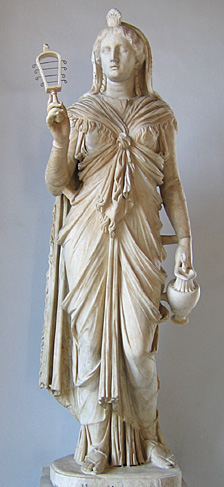


No comments:
Post a Comment